
Halo's Last Chance And Microsoft's Capitulation
History rhymes, Halo on PS5 is a sign of the times

Microsoft is out of the console race in all but name and we’ve now reached the games industry’s full maturation and a state of equilibrium that I don’t see ever being broken.
There is no gap in the console market left to fill, no technological revolution left to usurp; if you want to play cutting edge narrative experiences on advanced hardware at a premium price point, you’ll buy Sony’s PlayStation but if you want to pay a little less and play quirky, gameplay driven, family-oriented video games on the go and don’t mind compromised hardware then you’ll buy Nintendo’s Bop It, or whatever name they’ll come up with next.
We can pine for the days of Sega and Xbox, we can mourn the old times but this is how it’s going to be from now on.
Halo is a franchise that means an awful lot to me and once upon a time, I was an ardent Xbox fanboy so today, I’m writing this post in mourning: remembering the console dynasty that brought me so much joy and picking apart Halo’s long decline with a dash of hope for the future.
You Owe Xbox More Than You Think
Before I get in to Halo, I want to take a moment to remind everyone what Xbox has done for this industry.
It’s a bit of a meme in the retro collecting community that nobody collects for Xbox and that those few existing Xbox collectors are just holding out for the day when classic Xbox takes off and really gets big… but inevitably, that day never comes. Combine this with the horrendous state of the brand today and the low-brow perception of Xbox’s major exclusives and you have what has grown to become a widespread indifference to the manufacturer’s legacy, often an outright dismissal in fact.
Well, Sony fanboys, Nintendo heads, Sega refugees, I hate to break it to you but Microsoft were the pioneers of the technology and services you expect from a modern video game console.
The way I see it, the modern console gaming experience is built upon three pillars:
Playing Games In Tandem With On-Board Storage: Obviously, every modern video game console is designed to play video games but unlike the past where everything was stored on a cartridge or disc and your game progress was saved to a removable memory card, modern consoles have a built-in HDD or SSD for save file storage and game installation.
Online Connectivity And Infrastructure: A huge part of modern console gaming (and a source of constant pain for Microsoft) is the digital ecosystem. Smartphone apps, a shared library of games across generations, multiplayer and chat services, these are all features we expect and need from a console launched today.
The Exclusive Subscription Service: While console manufacturers (apart from Nintendo) have moved away from exclusive video games, all 3 have their own competing subscription models with something unique to offer. Nintendo’s Switch Online gives users a taste of the Big Red’s storied retro catalogue, Sony’s PlayStation Plus offers up a curated list of the best games from across its contemporary and retro history and Microsoft’s Game Pass for Xbox and PC is an all you can eat buffet of indies, Triple-A games and more.
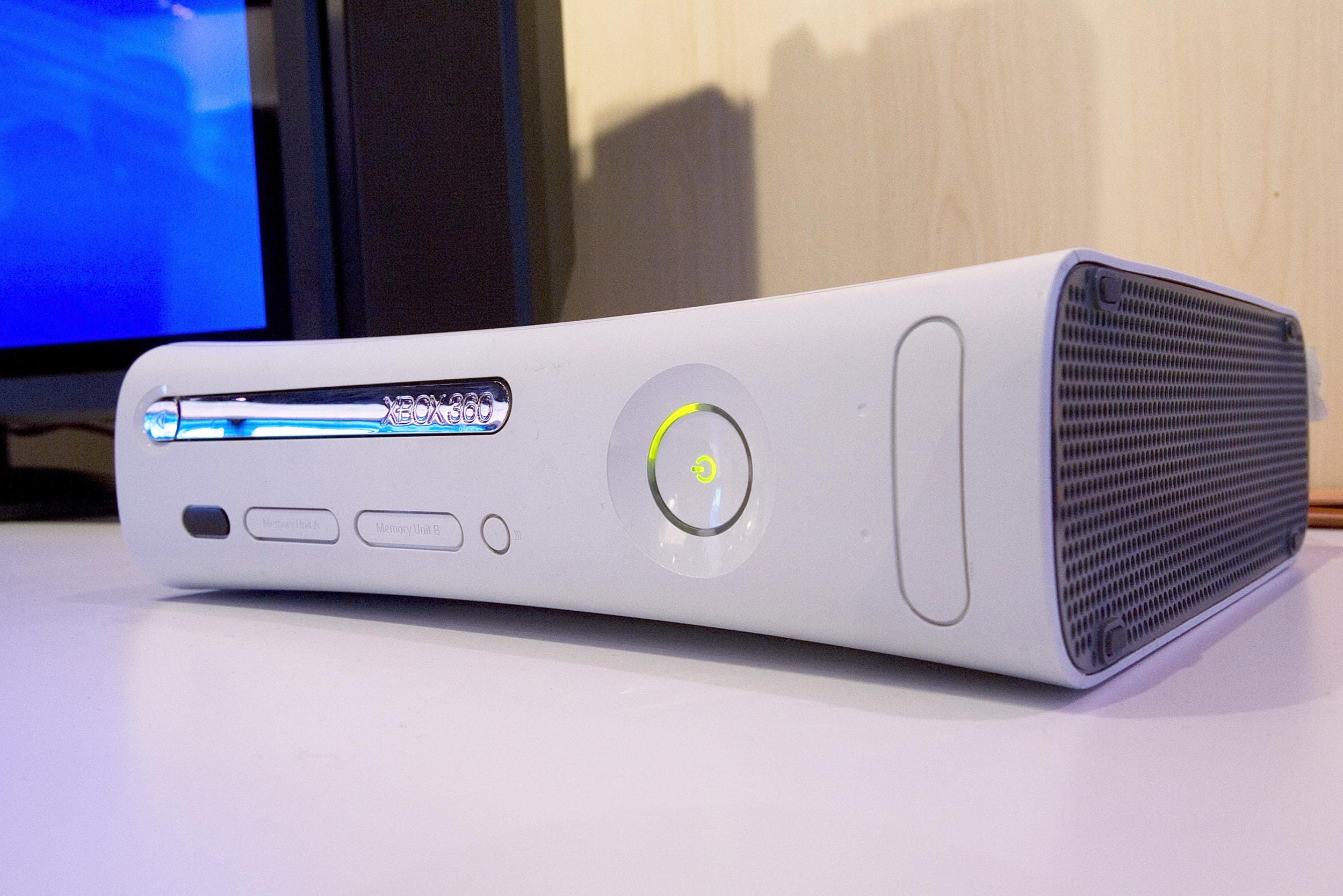
The original Xbox in 2001 was the first video game console to have a built-in hard drive and RJ-45 network port for online, it also pioneered that experience with the first version of Xbox Live and was the first console to have a game receive updates downloaded from the net. The 360 took this even further in 2005 by offering entire games for purchase on its Xbox Live service, which later expanded to include the video and music apps we enjoy today; when Nintendo’s Wii wasn’t even compatible with flatscreen TV’s and Sony’s PSN was hacked every other week in the 2000’s, Microsoft’s Xbox was leading the way.
If you’ve enjoyed any video game console since 2005: if you’ve ever watched YouTube on it, stuck on Spotify or bought a game digitally, then you have Xbox to thank for paving the way.
Intrinsically Linked
In the age of Forza Horizon on PS5 and God Of War on PC it can be a little hard to appreciate the magnitude of recent developments; Gears Of War and Forza are also long-standing, popular Xbox former-exclusives, so what makes Halo such big news?
Quite simply, it’s because Halo is Xbox: the console brand’s impact, innovations, image, they all come back to Halo.
Xbox is green and Master Chief is green. The first Xbox game with built in multiplayer through Xbox Live was Halo 2. Halo: Combat Evolved was the original Xbox’s killer exclusive. Xbox’s own documentary on the console brand’s early years has an entire episode dedicated to Halo.
When Nintendo makes a subpar Super Mario (like Super Mario Sunshine, let me antagonise the Sunshine fans a little bit, it’s too tempting) then it’s bad news but they can fall back on other IP’s: especially Zelda to fill in the gaps; Halo’s slip ups on the other hand collapsed Xbox.
How Did We Get Here? A Rough Timeline
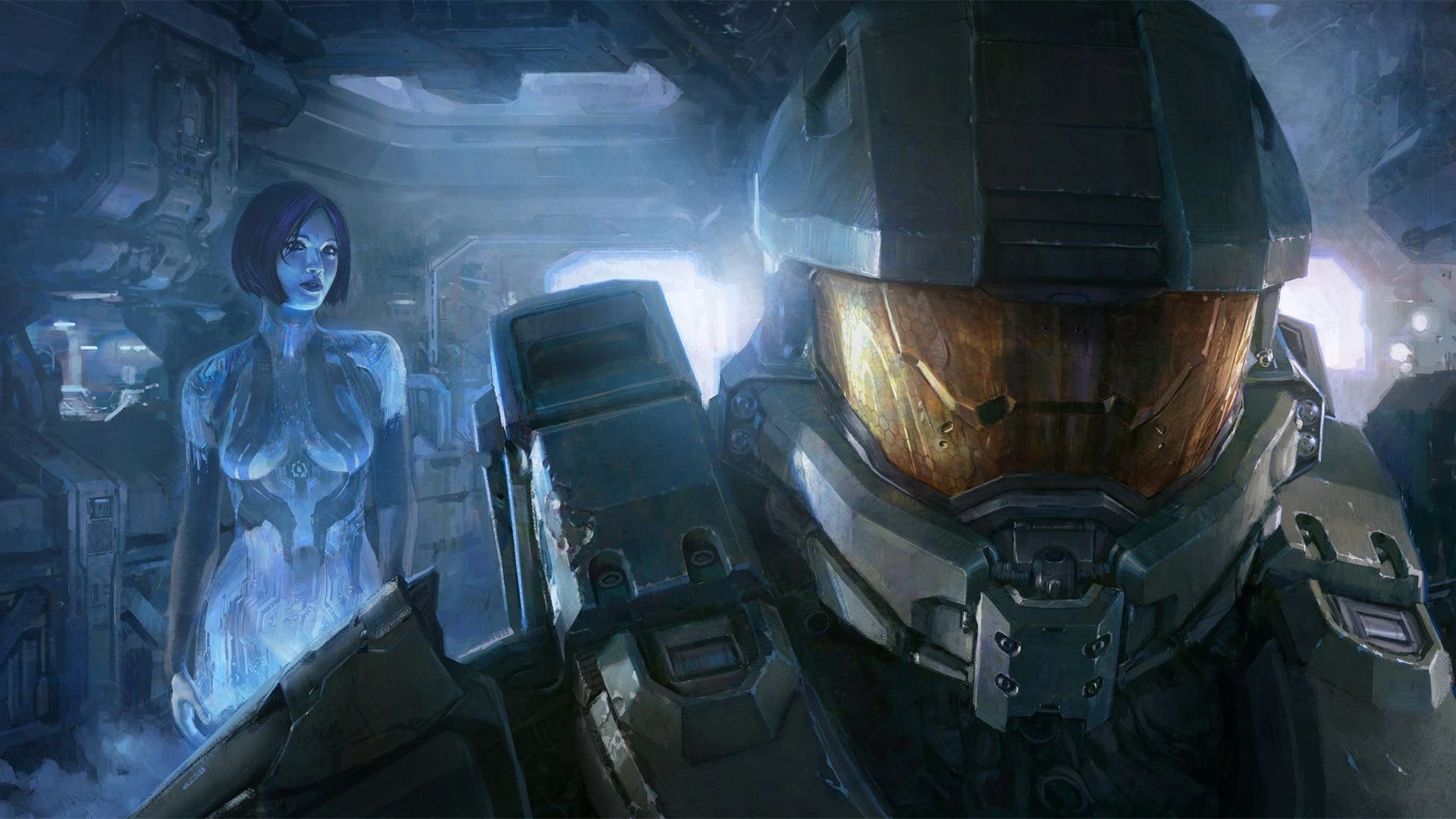
Like I said, Halo is Xbox, Xbox is Halo, so it’s no surprise that the downfalls of both are so connected. You could write a book about the past 15 years of Xbox and the Halo franchise so I’ll just be touching on the big milestones.
In 2011 the Xbox 360 had begun to run out of steam. Halo: Reach launched in September of 2010 to some pretty divisive reception in some circles; I didn’t like the game when it came out and I know I wasn’t alone in that feeling. Xbox’s Kinect had failed to challenge the (also ailing) Nintendo Wii in a meaningful way and Halo’s chokehold on the console FPS market had been undone by Call Of Duty which peaked in 2010 with the, in my opinion, best game in the whole series: Call Of Duty: Black Ops; Battlefield 3 had also arrived by 2011 and after a pretty bumbling late-2000’s Sony’s PlayStation 3 had picked up some powerful momentum, leveraging the console’s much superior hardware to deliver some great exclusives.
The first chink in the Mjolnir MKIV armour came with Halo: Combat Evolved Anniversary, which launched in November 2011 to coincide with the 10th anniversary of both the franchise and the console it stood for.
Halo: Reach was Bungie’s final Halo game before departing Microsoft, so the ensuing map packs and CE Anniversary were headed by 343 Industries: a company that was founded by Microsoft corporate apparatchiks and a handful of Bungie veterans with the express purpose of keeping the series going. Combat Evolved Anniversary was the first game the studio headed all by themselves and the result was… mixed.
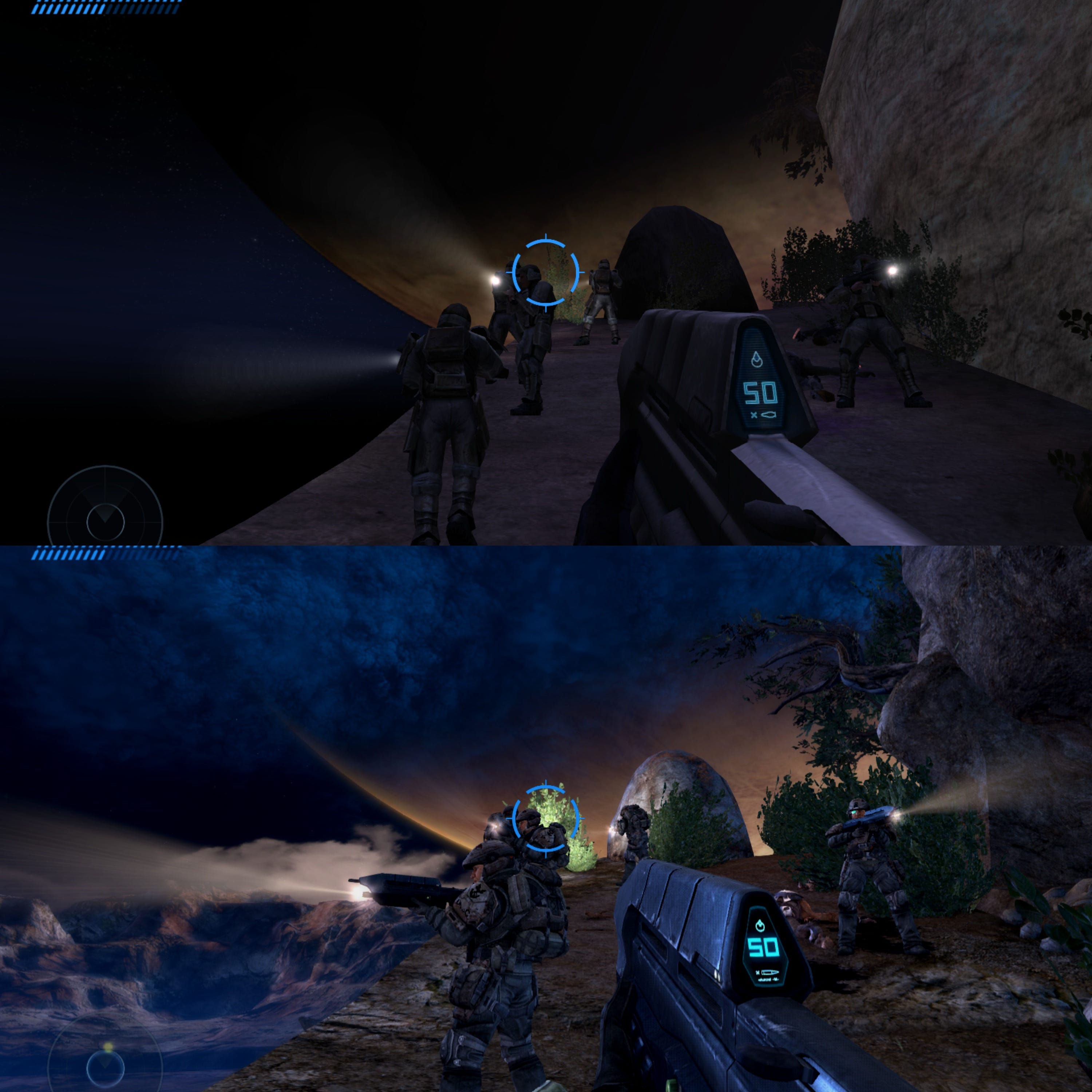
Combat Evolved Anniverssary wasn’t a complete disaster. The ability to swap between old and new graphics was mind-blowing, the remastered multiplayer maps were really fun, the added terminals gave some nice extra context to the story, the graphics on a technical level were impressive for the elderly Xbox 360 and at the end of the day, it was an easy way for new fans to experience the classic game.
Unfortunately, rather than being a straight remaster of the original, Anniversary largely replaced the art style with one that more closely resembled Halo: Reach, leading to some weird collision issues where modern models didn’t match the old and the brightened, oversaturated look of the game completely ruined a lot of the 2001 version’s horror and suspense; until recently, some fog and explosion effects were completely missing, only touched up years later for the Master Chief Collection.
343’s freshman effort was flawed but showed promise and most fans were feeling positive. Then came Halo 4… which is when the alarm bells started ringing.
Halo 4 launched in late-2012, pretty much right at the end of the 360’s lifespan, as such, it’s the best looking game on the console in my opinion, along with Dark Souls 2.
The focus was a lot different with this one. The trilogy’s story had been wrapped up in a neat bow so Halo was going to be more character focused from now on; the point of Halo 4 isn’t about the Covenant or rings or anything like that, it’s about the Master Chief finding his way back to Earth from a mysterious Forerunner planet but broadly, the story is about Humanity trying to find its place in the Halo universe. So far, the only contact with extra-terrestrial life had been through the barrel of a gun.
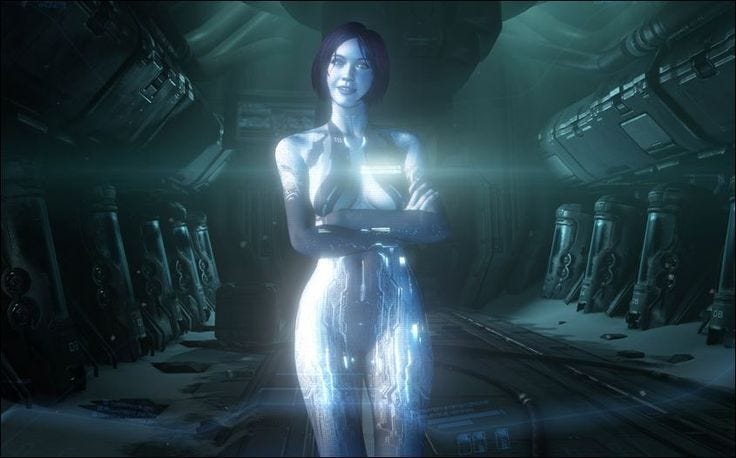
Halo 4 made several catastrophic missteps along this new path.
The focus on Chief and Cortana devolved into an inauthentic feeling, vaguely uncomfortable romance between the former child soldier and his sentient AI muse; the writing was exceedingly poor too, with 2 comic book villains, persistent dismissal of the Master Chief by other humans and an incredibly botched introduction of a new faction. To top it all off, the multiplayer was the worst in the series to this day, campaign missions featured bland and repetitive flip 3 switches set pieces and the Bungie-era art-style was out, replaced by 343’s own hideous take on Halo, complete with continuity issues as a result of them trying to scour away all traces of the old. Composer Marty O’Donnell was gone too which sapped away a lot of that classic Halo sound.
By 2013, the 360 was clearly going the way of the dodo and Halo 4’s legacy was being actively tarnished by the horrendous mismanagement of Spartan Ops: a CO-OP story-based episodic campaign that kept missing deadlines for new missions and was railed by fans for its low quality.
Microsoft’s big idea with the Xbox One was multimedia functionality: TV, Netflix, YouTube, Twitch: the lot and since Xbox is Halo and Halo is Xbox… of course it was going multimedia too. Now, Halo has always been a multimedia franchise: The Fall Of Reach novel released before the first game did and film projects like Halo 4: Forward Unto Dawn and some Halo literature was already starting to get adapted, like the excellent short horror film Halo: The Mona Lisa, which is based upon a short-story in the book Halo: Evolutions.
Most famously, the film District 9 was cobbled together from the remnants of a failed Halo project.
I highly recommend this even for non-Halo fans. Very on-brand for Halloween.
But with the release of the Xbox One this was all dialled up to 11. Endless comics and novels were coming out and there was even a second Halo film: Nightfall, to tease Halo 5 in the same way that Forward Unto Dawn teased Halo 4 but unlike that film, Nightfall was utter dross.
Also utter dross was 2014’s The Master Chief Collection. This compilation of Combat Evolved Anniversary, the newly created Halo 2 Anniversary, Halo 3 and Halo 4 (ODST and Halo: Reach were added later as well) and their multiplayer modes seemed like a dream deal at first: the mainline Halo catalogue on the shiny new Xbox One with an added remaster and technical boost, what could go wrong? Everything, that’s what could go wrong.
The Master Chief Collection arrived in an utterly broken state and wasn’t fully fixed until 2020.
Things were already bad but they were about to get a lot worse for Halo. You see, with so much Halo media coming out and Marvel’s Cinematic Slopverse reaching the peak of its popularity in the latter half of the 2010’s, an evil seed was planted: what if we made Halo like that? The result was Halo 5: Guardians and the worst campaign in the series’ history.
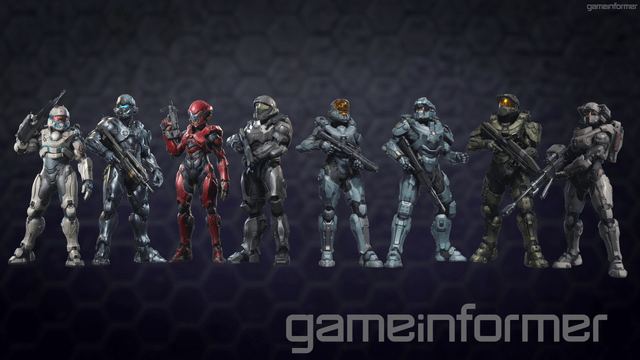
343 Industries’ fan goodwill since the release of Combat Evolved Anniversary had been destroyed by the MCC’s botched launch, it didn’t seem like things could get much worse but 2015’s Halo 5: Guardians (which turned 10 a couple of days ago) broke through the bedrock and just kept going.
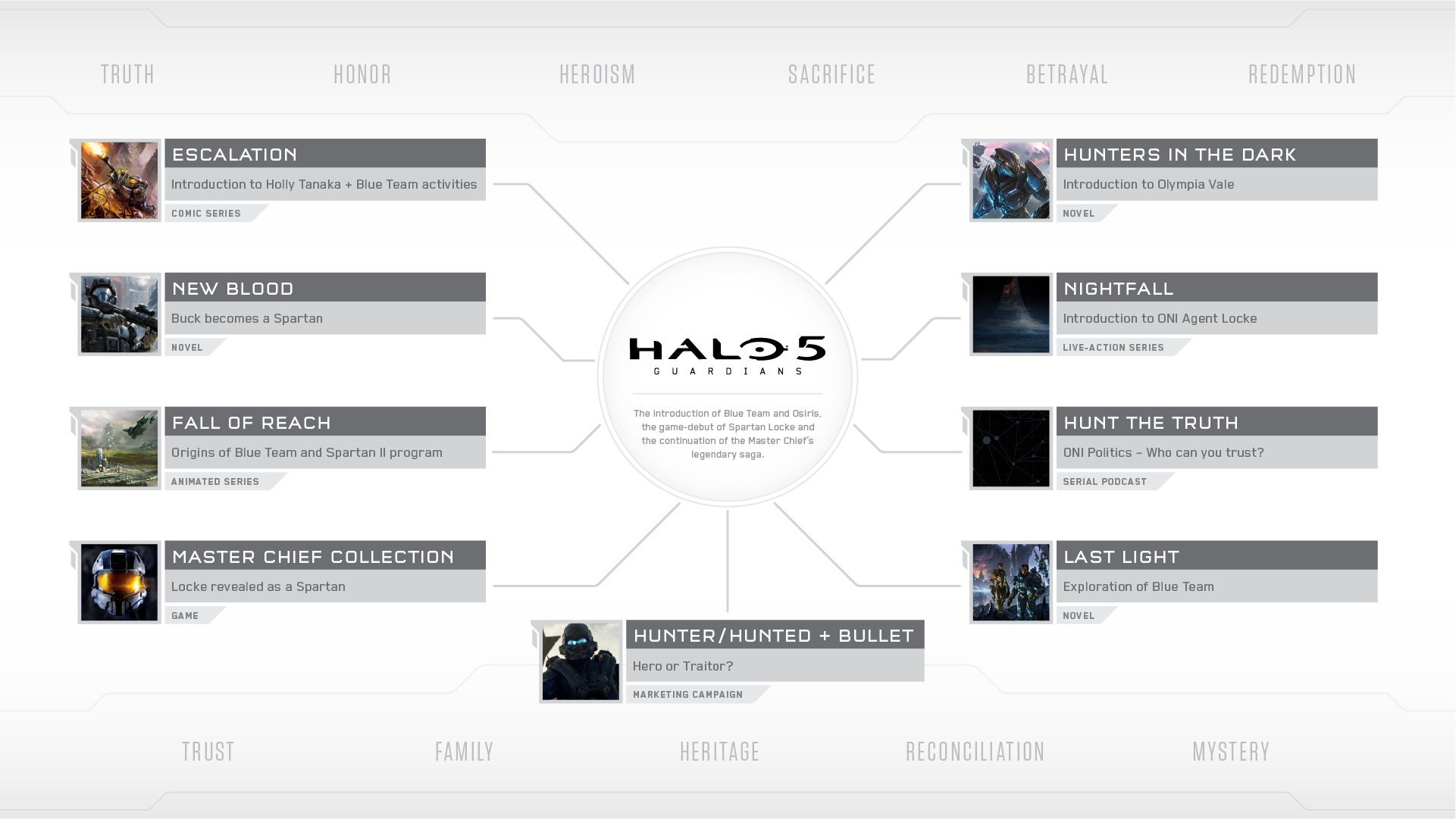
This post is already longer than I’d planned so I’m not going to pick apart the horrendousness of this game’s narrative with a fine tooth comb but essentially? Cortana is back… as the villain in an absurd AI’s versus humanity setup, Chief goes rogue with his team of old buddies for contrived reasons, the new second protagonist: Spartan Locke had some really cool lore but they made him an absolute bore and the Didact: Halo 4’s villain was killed off in a comic book, never to be seen again. They bring back Gunnery Sergeant Buck from ODST as a Spartan and if you want to know why… best get reading kiddo!
Let’s be real for a second, in a video game, the gameplay is always the most important part of the experience: it’s why I don’t like Red Dead Redemption 2 or GTA 5, it’s why I’m playing Pokémon Violet despite it looking like an Xbox 360 game; gameplay and fun-factor trumps everything, including artistic merit. Halo 5: Guardians barely even had that.
Time to make DOS-era FPS enjoyers unsubscribe, they detest these games: Halo was the successor to Doom and Quake, except adapted to fit the limitations of a console better. The arena shooter gameplay, lack of aiming down sights, weapon-based movement tech and strategy is all there in Halo; Bungie wanted it to be a pick up and play party game too, so you also have some goofy tools to work with, ragdoll physics and a ludicrously high jump. Halo 5: Guardians threw this all away, it has wall-running, the campaign is squad-based with a revive system, it features aiming down sights with heavy aim-assist, sprinting, mid-air dashing, everything you could want to be a trend-chasing mid-2010’s mobility shooter.
Doom 2016 arrived playing more like a Halo game than Halo 5 did (and really, it plays more like Halo than it does classic Doom) and it seized control of the genre’s momentum entirely, I have no doubt that Halo 5’s drastic change in course probably augmented Doom’s success on Xbox.
After the catastrophe that was Halo 5: Guardians, the series went into something of a dormant state for a while and apart from the admittedly well-received Halo Wars 2, there was no mainline game until 2021 when Halo Infinite arrived at last, after several delays.
For a fleeting moment, Halo fans were filled once more with hope. Halo Infinite’s reveal and eventual launch weren’t without issue but it generally went well.
Before we get to what went wrong with Infinite, I want to acknowledge that this is by far the best Halo game released since Reach in 2010. The art style in Infinite is on point, the weapons are fun to use, the story (while nowhere near as good as the original trilogy) has some nice moments of emotional punch; Infinite looks, feels and sounds like Halo, it’s an imperfect product but it deserves its flowers.
Tragically, mere months after launch, events completely out of the company’s hands would doom Infinite’s planned 10-year post-launch support.
In February 2022, in a massive escalation of the proxy war that had been raging in Donetsk and Luhansk since 2014, Russia committed its army to a full-scale invasion of Ukraine. This war had a fatal effect on Halo Infinite. Saber Interactive is officially headquartered in the USA but the company was founded in the Russian Federation, and mostly developed out of Saint Petersburg before the original arm of the company was closed in 2024; SPB is Russia’s cultural capital and centre of the arts and it was in St Petersburg that Halo 2 Anniversary’s cutscenes were made, the company worked closely with 343 on post-Bungie Halo, to the point where they were heavily relied upon.
Extensive Western sanctions and corporate exodus have essentially decoupled Russia from (official) Western business and support, this left 343 reliant on temporary contractors who had no idea how to work with Infinite’s proprietary Slipspace game engine. Campaign DLC was cancelled, split-screen was canned and fans waited forever to get basic multiplayer features like Forge and Theatre mode.
Edge Of The Abyss
We finally arrive at the present day. Microsoft have seemingly thrown in the towel and the next-generation ‘Xbox’ is apparently going to be some kind of prebuilt PC, meanwhile, they’re paying a lot of money to slap that logo on other people’s hardware like the ROG Ally.
Xbox’s time as a horse in the console race is over.
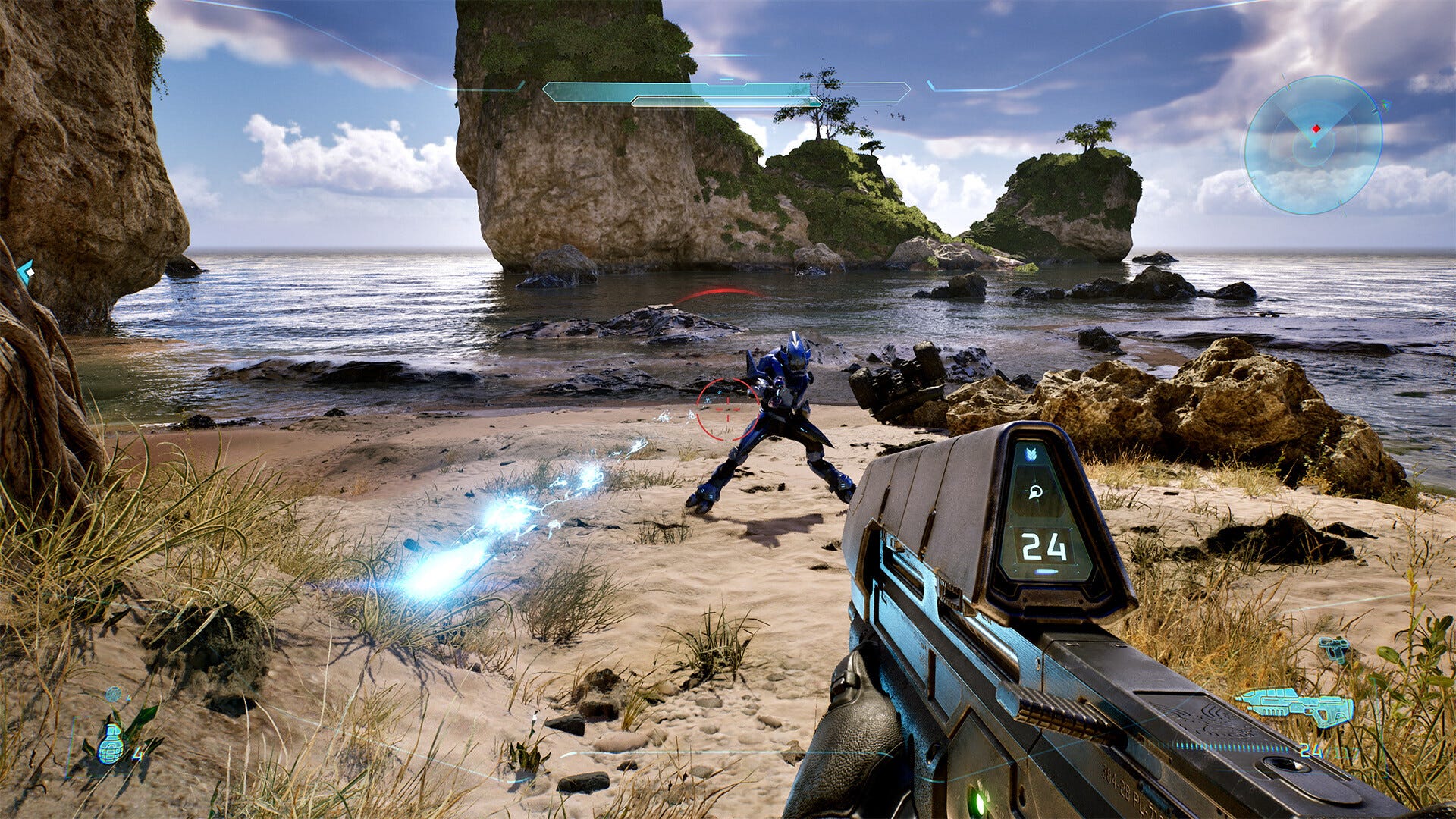
As for Halo? Well, the wall has fallen: The Master Chief is headed for PlayStation 5 with a full-fledged remake of Combat Evolved: Campaign Evolved which will include a couple of new missions as well.
The vast majority of fans have moved on, PlayStation loyalists will need convincing and the new Halo Studios need to prove they can surpass 343. Please, please don’t fuck this up.
Thank you very much for reading to the end, I hope you enjoyed today’s post, as always I’ll be happy to chat in the comments below and please like and subscribe to the Journal for more.
Scanlines’ Journal is a one-man publication financed out of my own pocket, much-appreciated donations and the subscriptions of my 2 very generous supporters. If you’d like to support the Journal, please consider hitting the ‘Support Scanlines’ button and making a small donation to my Ko-Fi page.
I was a huge Halo fan despite not owning an Xbox. I’d watch the games and read the books. Later, I bought and played the Master Chief Collection.
I agree with a lot of what you are saying. To me, Halo died with Halo 5. I actually thought Halo 4 was a pretty good game. Despite the rough execution, I thought exploring the human side of Master Chief was cool.
I also was hyped beyond belief for the Didact. He was an amazing character in the books. I was looking forward to a trilogy where Master Chief had to confront his Shadow in the form of this ancient alien warlord. It would make the conflict more personal, a nice change of pace from Halo 1-3’s cosmic war.
Halo 5 threw it all away. They threw away the emotional impact of Cortana’s death. They threw away the menace they’d built up for Didact. They threw away the sense of cosmic purpose humanity had in reclaiming the Mantle of Responsibility.
I consider Halo 5 the single most significant creative failure in gaming history. Microsoft alone has the resources to compete with Sony’s immense technical expertise. What they needed was a story to channel those resources effectively. Halo, as you point out, was that story. Its death meant the death of Xbox.
A great, chilling retrospective. I remember when I got my first 360 and how amazed I was by additions as straightforward as internal storage and an RJ45 port. Same goes for playing custom Forge maps in Halo Reach with the lads for hours a day. It felt like console gaming was entering a brave new world and that Microsoft could do no wrong. We've fallen far indeed, but at least Big Green's ignominious retreat from hardware might create positive ground for newer and better innovations elsewhere.