
Obsolete? - Resident Evil Retrospective (1/2)
My retrospective review of the original Resident Evil

I’ve always felt a sense of kinship with the night: with all things dusk and dark and dangerous.
For as long as I can remember I’ve been a night owl and an insomniac; 40 hours awake sometimes, staring at the ceiling forever trying to sleep at other times in my own private little purgatory, too exhausted to get up, too active to fully rest. I run at night, I go to the gym at night and in university, my favourite class took place at night.
As a kid I was afraid of the dark, of the creaking floorboards and settling materials of the house but as a man? I draw a deep and spiritual peace from the night.
But why am I waxing so poetic? I’ve always felt that Resident Evil was a game made by people who truly understand the night owls and shadow dwellers of the world.
When everything encourages us to be more neurotic, to sit and think and be ‘mindful’ instead of taking transformative action, when the world wants us to be more expressive, more emotional and modern video games always have to include CO-OP or ways of getting around a difficult task, Resident Evil is the antidote. You survive the night with a cool head, careful planning and by not cracking under pressure; Resident Evil is one of very few series that I’d say changed the way I think about life.
You can meditate, plan and cower all you want but sooner or later, you have to exit the proverbial save room and get it done.
The horror of Resident Evil isn’t that you’re alone at night, it’s that the peace of death, the silence of dusk and the calm of a black thundering sky have been perverted by the undead: twisted abominations of science; we all interpret art in our own ways and to me? Resident Evil is inseparable from the idea that nature’s sanctity has been perverted. Horror in this universe isn’t the howling wind in dark woods, it’s the distant thudding footfalls of a shambling husk that used to be human. The peace of night-time has been stolen and the body has not been allowed to rest.
If the body is a temple, then Umbrella are its worst defilers.
Join me this week as we enter the survival horror in Resident Evil.
Background
Resident Evil played a big part in ushering in what I consider to be gaming’s golden age: 1994-2007, when you could still launch a masterpiece after a few short years of work; it began active development in 1994 and by March 1996 the game was on shelves with the entire project taking 27 months when including pre-production.
While a rapid development cycle by today’s standards, Resident Evil actually took several months longer than Capcom had intended.
The team developing the game at Capcom: the affectionately named ’Team Horror’ directed by the famous Shinji Mikami originally intended for RE to come out on the Super Famicom (which is the console we know in the West as the SNES) but the idea was abandoned early on in favour of the PlayStation. On paper, you’d think this made everything easier: the huge increase in storage space on a disc-based console, the latest in 3D graphics technology and processing power but in reality? This decision actually stalled early development since none of the team had worked with a 32-Bit console before.
The team spent 6 months just familiarising themselves with the architecture of Sony’s grey box and figuring out what would and wouldn’t be possible to achieve. Early versions of Resident Evil featured high-polygon count 3D graphics and a first person perspective; that’s right, even this far back they had the idea to make a first-person title. However, it proved to be too great a strain on the humble PlayStation.
Team Horror made a series of wise decisions to ensure that Resident Evil would run well. The game’s signature fixed camera angles and static backgrounds came about to save disc space, a choice that conveniently also led to a distinctive, cinematic look which would come to shape the rest of the game’s tone and style, by not utilising 3D environments Capcom’s Team Horror were able to also include higher polygon character models and a greater number of characters on-screen, though in high density areas compromises had to be made, which is why the underground lab has zombies in the nude… but we’re getting ahead of ourselves.
You don’t need to know the entire Early Life section on Resident Evil. I could tell you that it’s a spiritual successor to Sweet Home on the Famicom and that the game was an enormous success… but everyone knows all this stuff, I’m writing this retrospective to share with you my Halloween tradition and my deep love for this series… so I have to make a horrifying admission here.
This is my first time playing the original, PS1-era Resident Evil… I know I know, I’ll get the brainrot sound for you.
The truth is, unless you purposely seek out the original version of Resident Evil, it’s not that easy to find yourself in a situation where you play this game before its remake today. Resident Evil isn’t that cheap on PlayStation 1, neither is the beloved DS version and let’s face it, I’m the only guy who chose to play it on Saturn.
There is a version on GOG but it only came out like a year ago and really, I doubt many gamers outside of the retro enthusiast or nostalgic RE fan are looking to play the older and by popular memory: obsolete RE1 experience.
My sole memory of this game is being about 6 years old, my brother showing me the famous zombie reveal scene on his PS1 and shitting myself immediately.
Version Rundown
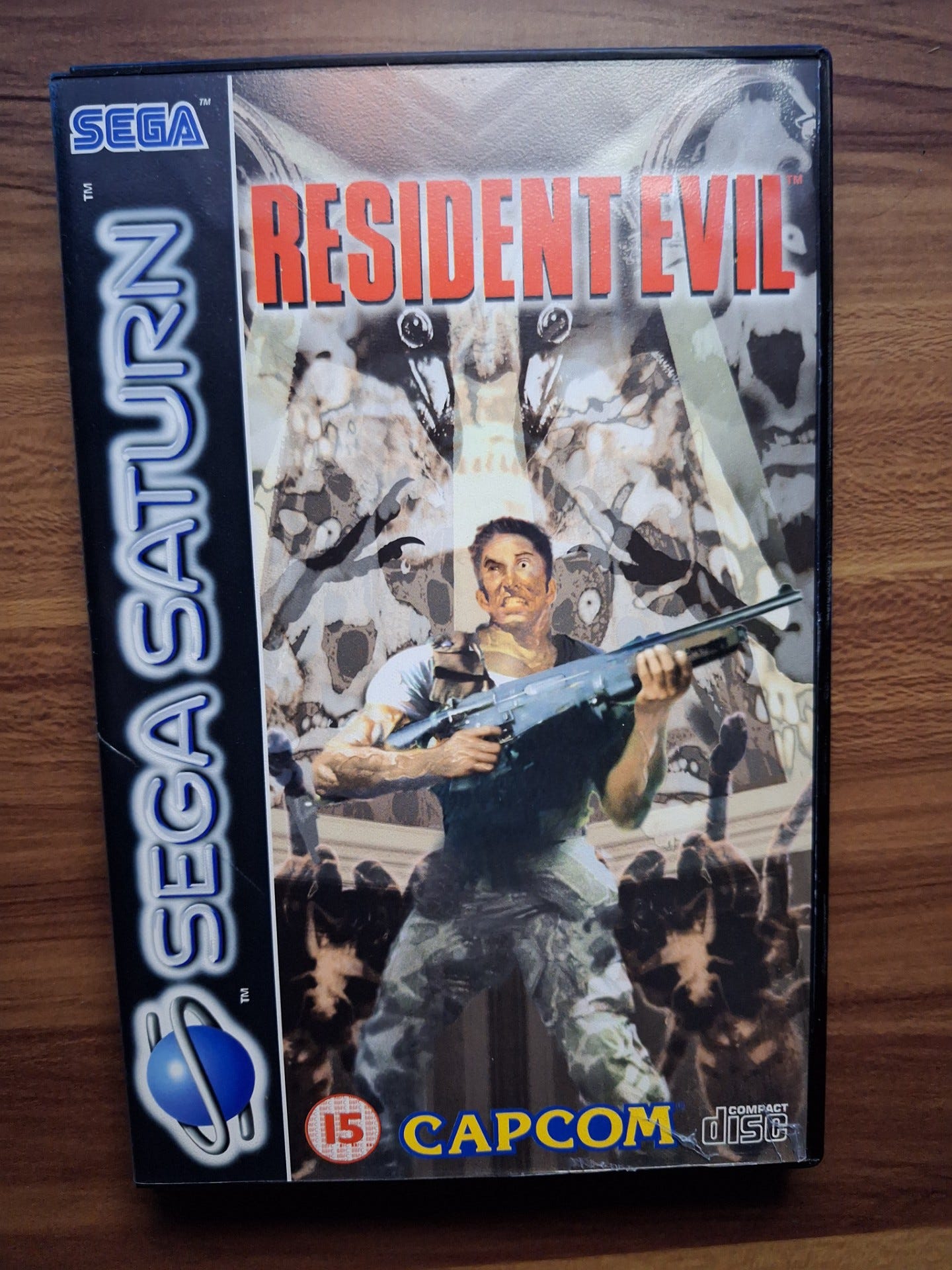
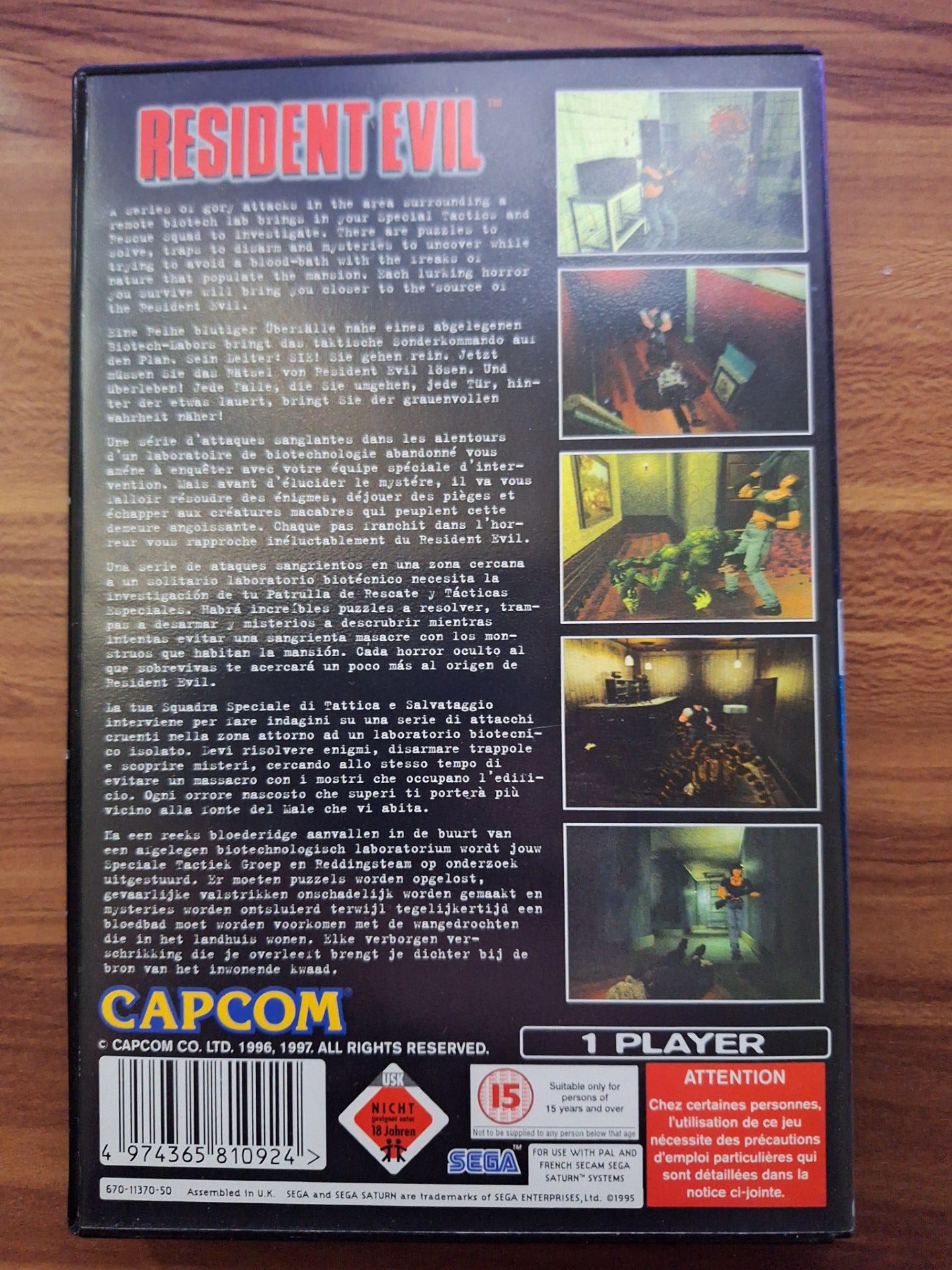
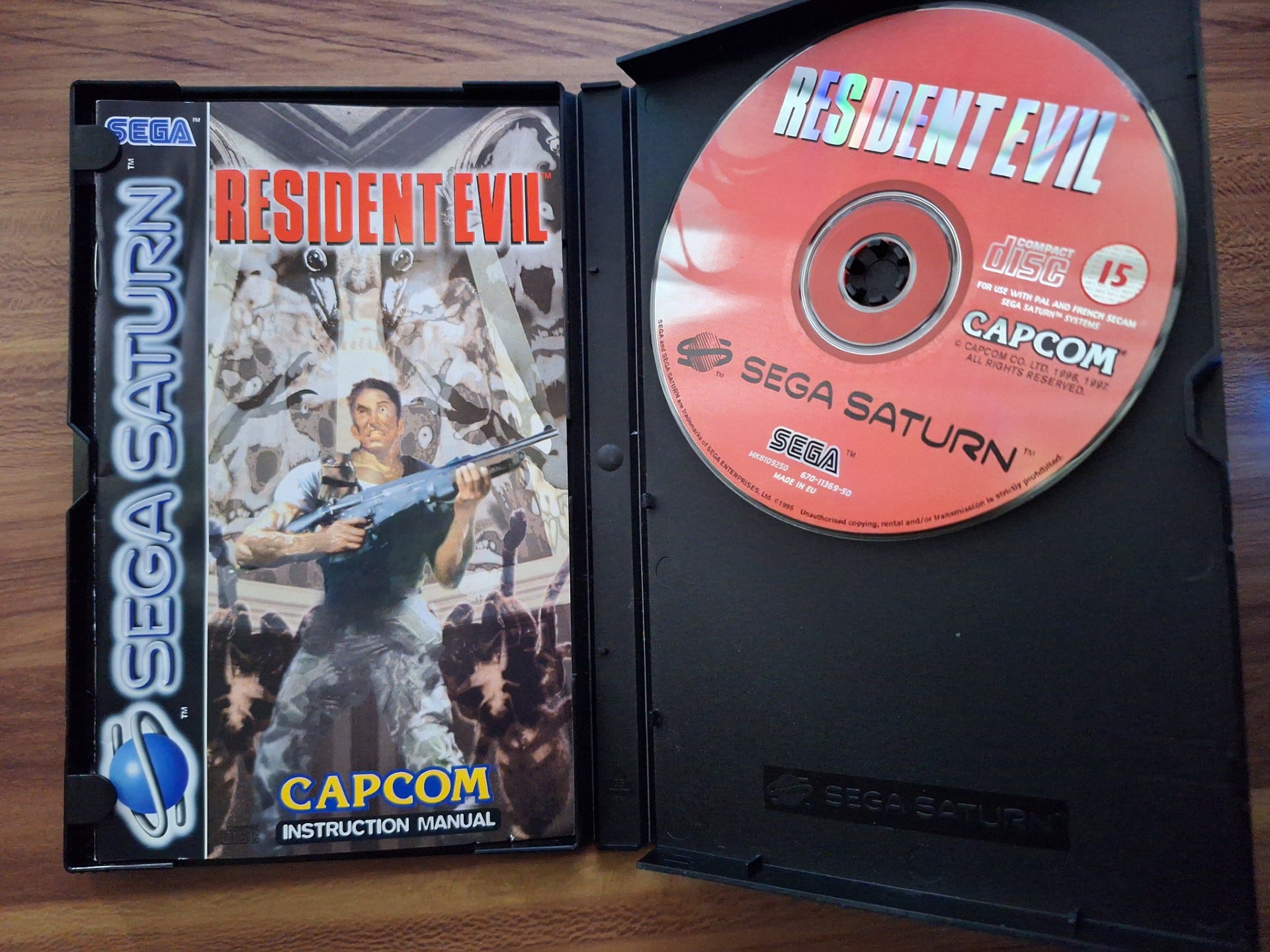
Now, you might be wondering “Scanlines, everyone knows the DS version of Resident Evil 1 is the best, why did you pick the one for Saturn? Isn’t this one crap?” The truth is, RE1 on the Saturn is a very interesting game.
Not only was this version released over a year later than its PlayStation counterpart but it also features some unique enemies, Saturn-esque graphical quirks, slightly more detailed backgrounds, slightly worse lighting and most importantly: the first ever appearance of Battle Mode in the franchise.
The Saturn version isn’t perfect, however, it is still worth playing; you’ll find this a lot with Saturn versions of PS1 games, there’s always a little pinch of something extra that makes it worth seeking out. I’ll be pointing out some of the differences as we go and ultimately deciding if I’d recommend this version to the layman... not that anyone owns a Sega Saturn. And just a warning, I got this game for about £40 here in the UK (which was only about £10 more expensive than on PS1) but in the USA, I hear the Saturn version can cost as much as $100.
When preparing for this retrospective series I was mulling over which version of each game I was going to play a lot. If I played on PC I’d sacrifice comfort and ‘vibes’ (God, I hate that word) but I could take screenshots; I’ve decided I’m going to play the most interesting version of each game, not necessarily the most optimal… because if I did that, I’d be playing the rest solely on Dreamcast.
Enter The World Of Survival Horror
Resident Evil opens with one of the cheesiest, most low-budget, most amazing pieces of full-motion video ever placed into a video game.
Following a string of gory murders in the fictional Arklay Mountains outside of Raccoon City and the disappearance of Bravo Team, S.T.A.R.S (Special Tactics and Rescue Service) Team Alpha are dispatched by helicopter to the woods in the middle of the night to ascertain the whereabouts of their comrades… and calamity follows.
Chopper pilot Brad Vickers watches Joseph getting mauled and pussies out, leaving our cast stranded.
Today, a lot of people love to laugh at this intro and the decades long hunt for its no-name actors practically taken off the Japanese street has become the stuff of video game legend but instead of laughing let’s just acknowledge how this FMV establishes the tone of Resident Evil perfectly and even tells you a lot about the game you’re about to play.
Chris, Jill, Barry, Joseph and Wesker take a moment of quiet contemplation, just like the player does when stumbling upon a new puzzle or checking the map, then they explore and look for clues before being ambushed; just like in the actual game, no matter how well-armed our heroes are, fleeing is the preferred option. YouTube compression (and this particular video’s delayed audio) makes this intro look like absolute shit but at native resolution on a CRT? I have to say it looks awesome, as if you’ve just popped in a VHS tape. Some versions are even in colour but most are not.
Some of this goodness might be due to my chosen version, as I’ve heard both the pre-rendered backgrounds and FMV’s are considered clearer here on planet Sega.
I love it. There is no dissonance between player and character (besides the polygon count) the characters behave how a player would and that ending? It’s cinematic alright: pure B-movie goodness. The drummer loves Wesker, apparently.
What you might not know if you’re a more casual fan of Resident Evil is that this intro has been heavily censored.
There are quite a few examples of censorship in the Western versions of Resident Evil (and believe me, there are many versions of this game) I’ll be pointing some out in this review, however, this is the most prominent.
The player gets to choose between controlling Chris Redfield or Jill Valentine at the beginning. On the surface, you’re just choosing between male and female and I can imagine if you went into this game blind as a young boy or adolescent, you might’ve picked the jacked, combat knife adorned Chris Redfield… and that’s a big mistake.
Jill and Chris are not really separate characters or campaigns: the changes are relatively minor between the two and essentially boils down to whether you prefer to see Barry or Rebecca, rather they are two different difficulty levels, the Japanese versions of the game even label them as such.
It’s a bit of a joke in the Resident Evil community that nobody ever plays as Chris… and it’s not hard to see why. Chris has less inventory slots, starts with just the knife, has to wait longer to get the shotgun and doesn’t even get the best weapon in the game: the grenade launcher. The extra health, Rebecca side-plot, firing speed and critical hit chance are pretty negligible in a game where the whole point is to avoid most enemies and the voice acting is well… Resident Evil 1. Most veteran RE players have a mental list of rooms they like to clear and avoid killing everywhere else anyway; when playing the remake (which we’ll get to tomorrow) I like to clear out the East Wing Stairway, the Dining Room Balcony and the West Wing Stairway. I made similar choices in this game.
As tradition dictates, I chose Jill for my first RE1 playthrough.
What A Mansion!
Resident Evil uses its first 5 minutes of gameplay to once again hammer home the kind of experience you’re going to have and to give the player a gentle nudge in the right direction to start exploring.
After hearing some hilariously poor and endlessly quotable horrible voice acting. (“Sdopet! Don’t open-THAT-door!”) The surviving members of Alpha Team minus either Chris or Barry are ordered by Wesker to search the West Wing after hearing a distant gunshot. Making your way through the Dining Room and into the Tea Room will trigger one of gaming’s all-time greatest cutscenes.
And the uncensored version which you might not have seen before.
Bravo Team’s Kenneth survived a whole day in the mansion just to become a snack seconds before help arrived, poor bastard.
Note that Kenneth is one of the only black characters in this franchise and he’s specifically noted as being the Bravo Team’s most senior member and goes out fighting, if I do ever cover Resident Evil 5… then I’ll be bringing this fact back up.
This cutscene is the point where me at age 6 and a whole generation of 90’s kids a decade before me collectively noped out of playing Resident Evil. Even today, I prefer this scene to the remake version, there’s something about this zombie’s eyes: a very human look of malicious intent behind them, seriously eerie.
Now, if you’re playing as Chris you’ll either have to tangle with your first zombie using just the knife (and probably get your first death) or save him for later but as Jill, if you return to the Dining Room the game rewards you by having Barry waste the shambling corpse for you. This teaches the player that A: Zombies don’t respawn and B: Avoiding combat yields rewards, it’s another one of those tutorial touches that makes Jill the default experience… that and you miss out on Barry’s hilarious voice performance if you don’t pick her.
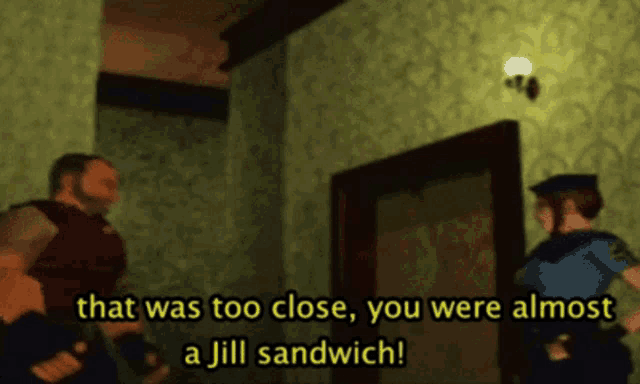
It’s just occurred to me that the Spencer Mansion has the Backrooms’ wallpaper.
Anyway, head back to the Main Hall to reunite with Captain Wesker and Resident Evil truly begins. As Jill, you and Barry realise Wesker has vanished, you split up and the bumbling lad points you in the direction you’re supposed to go and as Chris? You’ll be left all alone in the mansion with only a new handgun left behind by the Captain and your trusty knife to keep you company.
The dated presentation aside if there’s one thing RE1 nails it’s atmosphere.
If you try to leave through the front door, you’ll get a little video where a Cerberus: a zombie dog tries to squeeze in. All around you is silent and neither Bravo nor the other members of STARS Alpha Team have left any trace of their whereabouts. You are utterly trapped and alone, especially as Chris.
While the remake’s vision of the Spencer Mansion is a lot more horrifying, I’ve really come to appreciate this version too.
This Spencer Mansion evokes a stronger unease and is more believable as a location that has been freshly overrun. All the lights are still on but there’s not a living soul to be found, the place is generally well-kept and clean which makes the spatters of blood stand out more starkly; the repeated, off-yellow wallpaper, barren walls and tasteless carpet gives the building a liminal feel and fits thematically, evoking the sensation of being not in a place where people lived but in an interior masquerading as a place of residence.
![Resident Evil Directors Cut (JILL parte #01 ) [PLAYSTATION] #903 GamePlay](https://substackcdn.com/image/fetch/$s_!_wAX!,f_auto,q_auto:good,fl_progressive:steep/https%3A%2F%2Fsubstack-post-media.s3.amazonaws.com%2Fpublic%2Fimages%2F1deb123b-0d7b-4f5b-b6c8-dad1e51781b1_1280x720.jpeg "Resident Evil Directors Cut (JILL parte #01 ) [PLAYSTATION] #903 GamePlay")
Another area where this unease is felt is in Resident Evil’s soundtrack.
It’s been often said of Resident Evil that it’s more an exploration and puzzle-solving adventure game than a horror and when you listen to the music, it’s hard to disagree with that.
These songs don’t convey horror to me, I get the feeling of a place where something terrible has happened and I’m there scouring what’s left behind. It helps that Resident Evil 1 uses music a lot more sparingly than later entries, sometimes you feel so alone in the mansion that even the game’s audio files have lost you. In the remake, Bravo Team are missing in a scary house of horrors, in the original? Bravo Team have vanished inside a liminal space.
The Nintendo DS version of RE1 is titled Resident Evil: Deadly Silence and that subtitle really describes the atmosphere best.
Well… unless you’re playing the DualShock Edition Director’s Cut.
Some versions of Resident Evil are best left forgotten.
Stumbling In The Dark
So far I’ve had nothing but praise for this 90’s classic but undeniably, there are some elements both of this version and the game as a whole that can be a barrier for entry.
Starting with the Saturn version’s specific issues, the famous door transitions take longer than on PlayStation. I’m not impatient to the extent where this is a dealbreaker but I know some players really hate this and it’s undeniable that these frequent loading times between rooms and floors give the Saturn RE1 a very stop-and-start feel. Furthermore, the 3D models and lighting look significantly worse on this console.
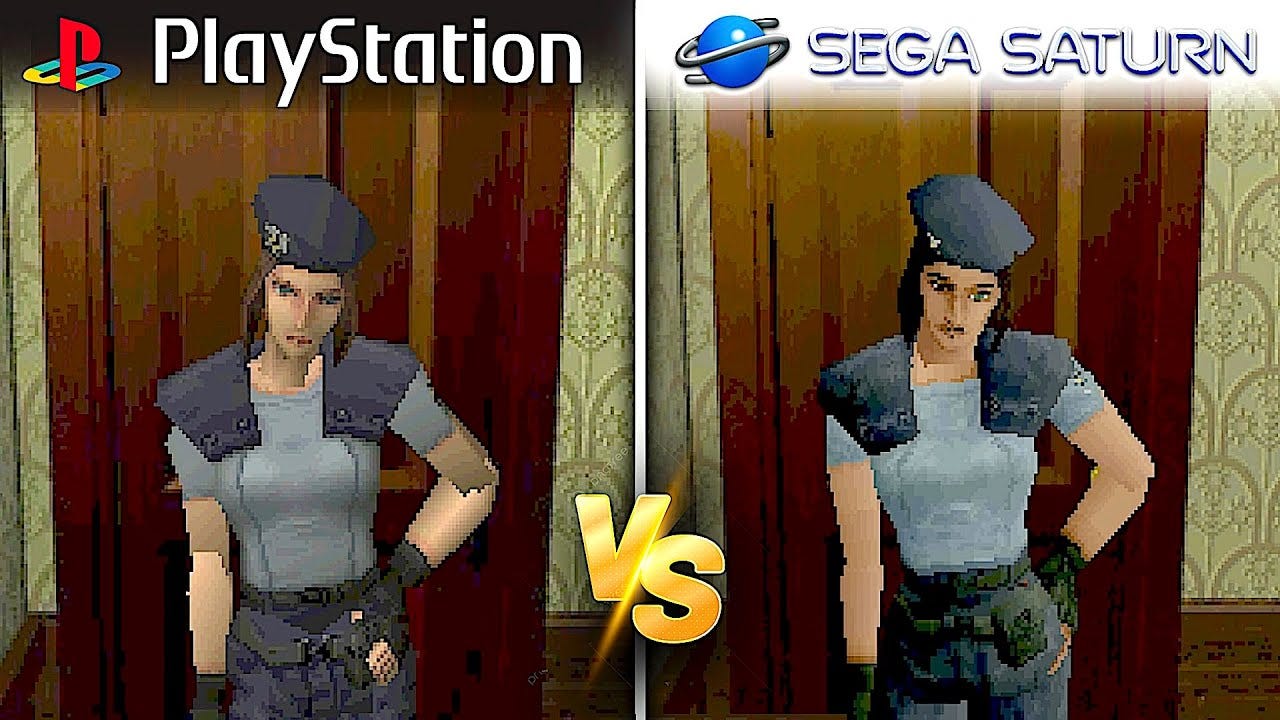
Saturn Jill doesn’t even look like Inezh: the actress in the intro cutscene and 3D models have zero lighting: only the same flat tones.
Also worth noting is that the Saturn version doesn’t have auto aim which can make ammo wastage a lot more common, a few times I’ve completely whiffed grenade launcher shots and felt my soul leave my body, it’s not the best. I don’t know why it’s missing, it just makes the dated shooting even less fun.
Speaking of less fun the Ticks: the Saturn version’s exclusive enemy… are fucking horrible. The Hunters in RE1 are annoying to hit, hard to dodge and do a ton of damage, the Ticks are essentially a reskin but they attack faster and jump more often. These little shits took away 20 minutes of my progress and half my supply of healing items.
But let’s address the enormous, undead, rotting, stomping elephant in the room: tank controls.
If you’ve never played a 3D video game from before the year 2000 then there’s a good chance you’ve not used tank controls before. With this type of movement, forward and backwards move the character forward and backwards, you’re not moving in the direction you pressed, rather you’re reversing and accelerating like a tank. Many players find this a deal breaker because it goes against muscle memory; to turn around you have to turn the entire character model, if you press backwards Jill or Chris will literally start walking backwards.
I personally have zero problem with tank controls: Resident Evil 4 uses them and most people who’ve never played a Resident Evil game have enjoyed that one at least, so I’d urge you not to let it stop you from playing the other classic Resident Evil games. You definitely get used to it with practice and later entries improve on the tank controls with a quick turn. If you watch zombies close enough you’ll pick out the times you can run past safely, no turning around or sideways movement required.
Lastly, Resident Evil’s save system has none of the safety nets of the modern games like checkpoints; if you die, no matter how long ago, how far back or under what circumstances you last used a typewriter, you’re getting sent back there, this is fine in the Mansion but later on in the game, Typewriter and Item Box placements get a bit weird.
Déjà Vu
I’m extremely familiar with this game’s remake, even so, I found my first visit to this original incarnation of the Spencer Mansion to be refreshingly aimless.
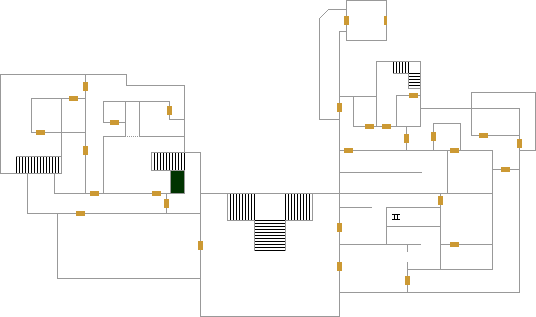
Mansion Ground Floor Map
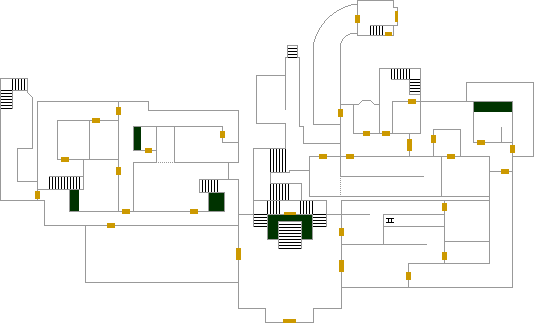
Mansion First Floor Map
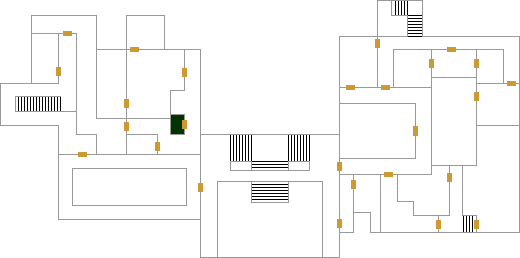
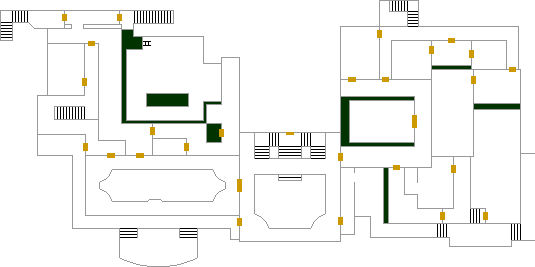
On paper, the original rendition of the mansion doesn’t look miles apart from REmake: the entire eastern half of the map is almost completely unchanged and only the cemetery is really absent, yet the lack of connecting stairwell in the West Wing, the different method for unlocking the back door that leads to the Courtyard along with the entirely unique atmosphere of the original mansion and the different key placements have been a lot to get used to.
I spent 2/3rds of the game carrying around the Armour Key still because I assumed that the second door on the right in the Main Hall wasn’t accessible until your second visit to the mansion like in the remake. I was wrong.
When you’ve been playing the same game yearly for half a decade, to the extent where you can look at these non-descript rectangles and see which room they are in your mind, every change is very noticeable. At one point I even stumbled across a boss fight with the giant snake: Yawn in a completely different room than I had expected. The deeper into the mansion I got, the more different it became.
I can also see exactly why a lot of the changes were made.
I want to discuss these additions tomorrow in my REmake review but what I’ll say for now is that there are a lot of rooms in the mansion that are just completely empty or contain very little besides herbs or an extra magazine of pistol rounds, it’s really strange and by the 75% mark through the campaign, I found myself swimming in healing items.
All of this being said, the Guard House, Courtyard and Lab are pretty similar across the original and remake versions of RE1.
In the beginning I was inclined to say that the original RE1 is harder but between this game’s overabundance of herbs and the REmake’s easier to dodge zombies and powerful knife? I’d say they match up about equal.
The Ultimate Life Form
WARNING: This section will spoil the plot of Resident Evil and discuss the way in which it’s delivered. If you’ve somehow managed to avoid spoilers since 1996 and want to continue to do so, skip ahead to the next section.
About halfway through the game you’ll come to the Guard House which also houses the Aqua Ring in its basement… and our first tangible clues that all is not what it seems.
While exploring the mansion, if you’re playing as Jill, Barry might be eager to help and ensure you don’t fit nicely into a sandwich but he is also comically eager to split up and during your exploration of the house’s many rooms you might have picked up on a few things: a file with a torn out page, hidden rooms that have already been picked clean and in the Guard House Wesker will finally reappear: unseen since the first 5 minutes of the game, seemingly in a rush to get you away from there and back to the Mansion.
While back there, you’ll discover written proof that S.T.A.R.S was purposefully led to the Mansion to gather combat data and that the zombies, Cerberus dogs and other creatures you’ve been fighting weren’t the result of a freak virus at all, rather the by-products of biological weapons testing… and that the culmination of this research still lurks below.
Resident Evil actually attempts to deliver its story in an interesting way: first Wesker vanishes on you making him the prime suspect but then Barry starts making half-assed excuses and also disappears; Chris being nowhere to be found (or Barry and Jill as Chris) makes the whole thing weirder, I’d have to imagine for a player going in blind it wouldn’t be that easy to point out the traitor, especially as Chris since the side character for his campaign: Rebecca, is a surviving Bravo Team member and is as clueless as you are.
A lot of From Software fans wank that company off for their innovative storytelling using notes and item descriptions and claim they were the first to do so but Resident Evil (among others) has always supplemented its plot this way; the game’s biggest plot twist comes when you find a certain A. Wesker on a slideshow of Umbrella employees.
Unfortunately the horrible voice direction, hammy performances and terrible mixing make the entire thing impossible to take seriously.
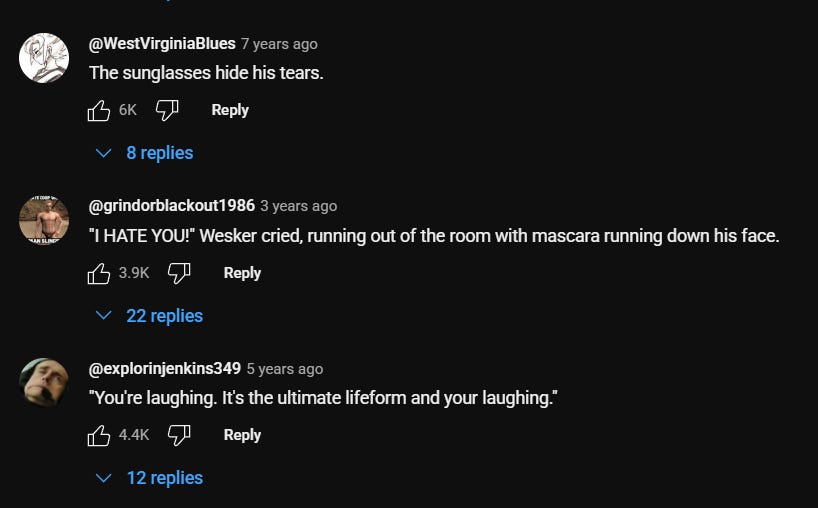
By the time the betrayal comes and Wesker extorts Barry to hold Jill at gunpoint or shoots Rebecca in Chris’s game, you just can’t help but find it hilarious when he whines at Chris like a dweeb for laughing at him, or relieved when he silences Rebecca’s irritating voice for a while.
This is my favourite piece of hammy voice acting in the entire game, he sounds like such a whiny nerd, like Chris just called him a dork at lunch.
It’s alluded to throughout the game but in the bowels of Umbrella’s Lab beneath the Mansion Courtyard resides Tyrant: the culmination of Umbrella’s research and the T-Virus’ namesake. Resident Evil lore is vast (and I don’t want to state facts that didn’t exist at the time of this game’s release) but essentially, the zombies’ brain damage and lack of intelligence made them poor bioweapons, other projects like Yawn (the giant snake) and Neptune (the giant shark) were too situational to be viable.
Tyrant, standing several feet above the standard person and possessing intellect and the Cerberus: able to follow rudimentary orders were the sole successful weapons produced at the lab.
Traitorous Captain Wesker unleashes the Tyrant on the surviving members of S.T.A.R.S Alpha but the creature malfunctions (in the REmake, Wesker remarks that it’s ‘premature’) Tyrant mortally wounds Wesker but of course, our team of plucky, poorly voice-acted heroes slay the monster and escape the self-destructing lab after signalling pilot Brad Vickers for help. Make sure you collect the M.O Discs though, otherwise you’ll leave the character you didn’t pick to die in the lab’s prison cell.
Inexplicably, exclusive to the Saturn version, there is a second, golden Tyrant you have to kill as Chris.
I find it difficult to write about plot and story in games because so much of it: the feel you get for a character’s personality, how the design ties into their character and my thoughts before I know the full truth are simply overwritten or can’t be conveyed effectively but once again, I stress that the skeleton of a good story does exist in this game and it may or may not be elevated to greatness in the remake.
There are actually numerous miss-able cutscenes in the Mansion and alternate scenes you can encounter simply by entering different rooms at different points in the playthrough. It’s just another way that Resident Evil games make themselves, in my opinion, the most replayable in the medium. There are even different live-action ending cutscenes you can get and depending on your choices, not everyone makes it out of the mansion alive. Unaware of the specific requirements, I actually got Barry killed in my run. RIP In Jibble.
SPOILERS END HERE
A Real Research Project
Before I finish this review, I want to share the incredible efforts of the Resident Evil community in tracking down the actors who portrayed Chris, Jill, Wesker and co. in the game’s live-action cutscenes.
The actors used in Resident Evil 1 weren’t credited with full names and didn’t go on to have any involvement with the franchise in future (or really, any well-known acting credits since) so it was actually significantly easier (although still a long process) to find out who gave the voice performances.
Using nothing but grainy old behind the scenes footage and long hours of sleuthing, the community over the span of an unbelievably long time managed to track down the original cast.
How long? Well, we didn’t discover the identity of Chris Redfield until 2017, a full 21 years after the release of the game. From around that year onwards the mystery was finally beginning to be solved and at long last, in 2024: 28 years after Resident Evil came out the final unknown actor: Joseph’s was discovered.
Prominent RE channel Residence Of Evil had the good sense to get them to play the game for the first time; Resident Evil had no title when they were playing their parts, it was all shot in a single night and in Japan where a lot of them were studying/working temporarily the series is known as Biohazard, in short? None of the actors had any idea that this titan of gaming was something they helped birth.
There is more footage of the original cast on this channel, I highly recommend giving it a watch.
Friends from down under, you might be interested/pleased to learn that Barry Burton is an Aussie!
The actress and actor for Jill and Joseph confirmed their identities but as far as I know, they respectfully asked that their privacy be honoured and not to be contacted further, which is why I have not named them here.
On the other hand…
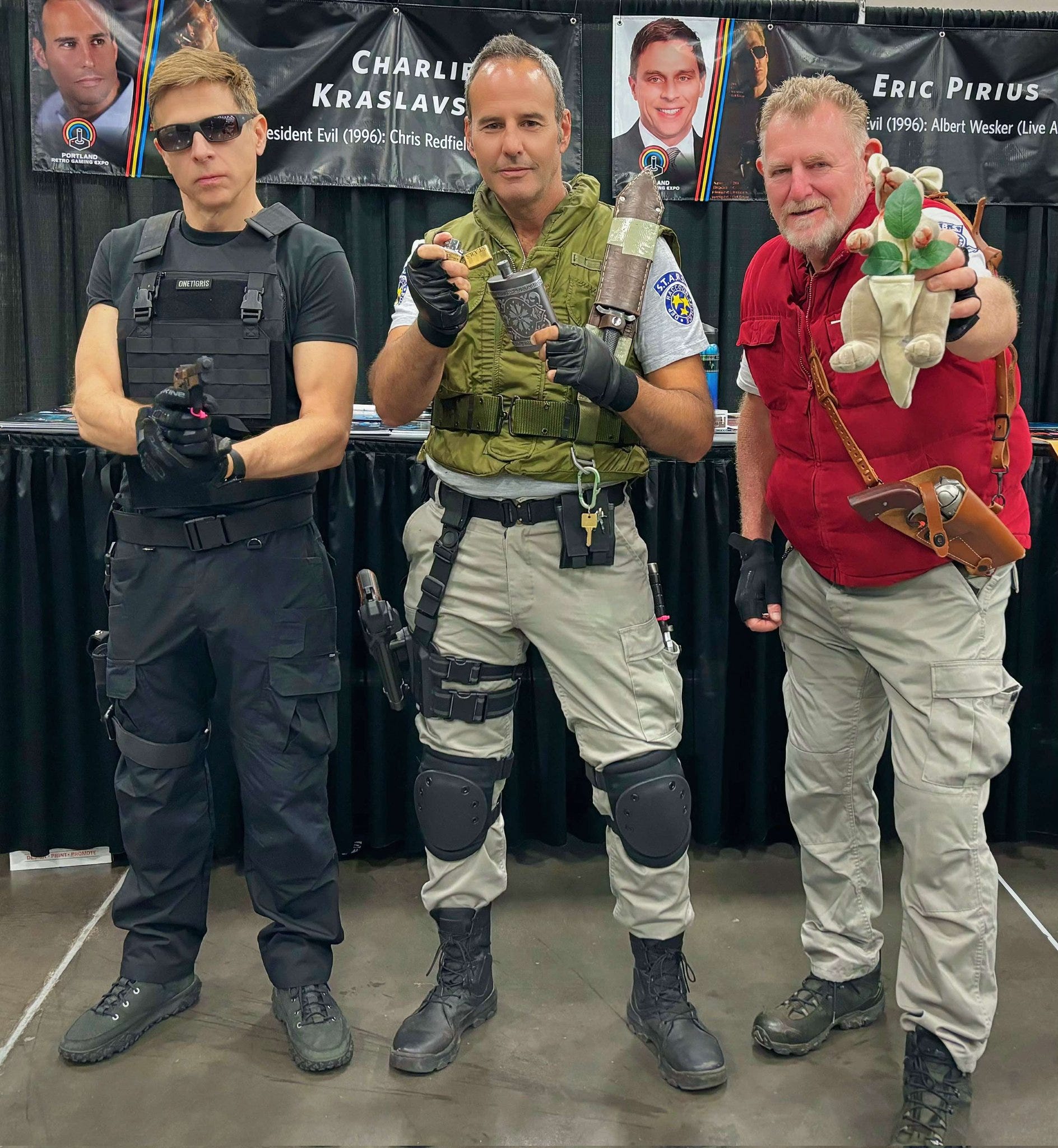
Eric Pirius, Charlie Kraslavsky and Greg Smith: Wesker, Chris and Barry have all taken to conventions and signings for fans. It’s been incredibly heart warming to see. These absolute legends genuinely had no idea of the untold millions of gamers’ lives they’d helped shape. I know Linda (Rebecca Chambers) has also been attending events but I can’t find many pictures for some reason.
It’s wonderful that the entire cast is still alive and well with us, which I tragically won’t be able to say for some of the future games in this series.
Surviving The Night
Resident Evil is one of the most important video games ever made, it was the first horror game to reach mass appeal, it began the survival-horror genre proper and pioneered staples like fixed camera angles, limited saves and the safe room. Furthermore, it’s still a load of fun to play today.
If you’re only familiar with this game’s remake like I was then I highly encourage you to seek out the GOG version, or to the more analogue inclined, I’d say the Saturn version is just as good as on PlayStation with some fun little quirks.
YouTube, Reddit and large swathes of the gaming community are quick to declare this original game ‘obsolete’ or ‘dated’ but in my humble opinion it has a charm all of its own; if I want a fun horror-themed puzzle and mystery game, I’d play RE1 1996, if I want to get scared shitless? Well… let’s save that for tomorrow.
Thank you very much for reading to the end of today’s post and I’ll see you again tomorrow for part 2 of this retrospective. Don’t forget to have a chat in the comments below, leave a like and subscribe too if you want to read more.
I’ve been incredibly humbled by the support of my readers so far: two paid subscribers and another hugely generous one-off donator so far have been keeping a spring in my fingers and a smile on my face, if you’d like to fund future content and support the Journal or just feel like making my day then please consider a donation to my Ko-Fi page via the ‘Support Scanlines’ button.
I have long said the first time I walked around the corner and saw the first zombie kill in RE1 was one of the most iconic moments in gaming. It was the first time I had seen anything like that - hell it was the first 3d game I ever played. I had never considered it teaches you about non-respawning enemies which is a nice touch. I also always appreciates the tank controls in this game due to them creating tension and increasing fear. Maybe it was unintentional, but not being able to run in circles and fire away and having to nervously position yourself to run was way closer to the feeling this setting was going for.
BARRY died??? Review invalidated.
As a PC gamer of the era, I was always biased towards the Alone in the Dark series for my primordial horror adventure, but unfortunately that series went squirrely and never recovered. I still contend that a hard drinkin private eye is the best possible protagonist for such a series, whether or not he ends up dressing as Santa or turning into a cougar [long story].