
Turning A PSP Into A PS1
[Hardware Review] Some legally grey fun with my new PSP.

In the past 5 months I’ve been making changes and getting my life together in a big way; back on the gym grind for the first time in a few years, watching what I eat and working towards making my lifelong dream of being a published author a dream no longer.
A consistent point of friction is the British public transport system: often delayed, always between 5-10 minutes late and never frequent enough.
When I went to Berlin back in 2015, the concept of public transport arriving every 5-10 minutes was shocking to me: like I’d stepped 50 years into the future; the best you can do here is every half an hour, unless of course, you’re living in London.
Anyway, for a while now I’ve been looking for a handheld that’ll fit nicely into a gym bag or a pair of jogging bottoms: something less bulky and expensive than the New 3DS XL or the Switch 2 and something less sexually repellent than the DS Lite. The solution I settled on was the humble PSP, which is a console I thoroughly enjoyed as a kid but had neglected to add to my adult collection until now. Those of you who grew up with this thing -and since the PSP is the 12th best selling console of all time, outselling the likes of the 3DS, Xbox One and sitting only about a million behind the GBA, I’m sure there are many of you- will know the delights this handheld hides but in case you’re unfamiliar? The PlayStation Portable hosts a vast array of top notch, portable versions of PS2 and PS3 games, a fan-favourite version of Tekken 5 among them, a sprawling hoard of acclaimed tactics games and JRPG’s as well as its own suite of exclusives that have rarely seen the light of day since including a mainline Metal Gear Solid game of dubious canonicity and a version of LittleBigPlanet with completely different levels.
More than all that, this is a console I have very distinct and sweet memories of: the PSP was my big gift for Christmas as a child in the year 2008, so while it’s got a grown up image and looks sleek as hell, I can never quite detach it from the experience of eating Oreos and drinking hot chocolate on the sofa, looking up from Ratchet And Clank: Size Matters and Daxter every now and then at the soaps’ Christmas omnibuses.
The PSP is also a ridiculously versatile device. Armed with removable onboard storage, Wi-Fi connectivity, a USB port, an internet browser and a proprietary disc medium: the UMD, that played host to films as well, Sony’s PSP was an MP3 player, video game console, computer, DVD player and infamously, a gateway for teenage boys to view pornography all in one! Thanks to this connectivity, the PSP was actually my first experience with online gaming, where I enjoyed a few online space battles in Star Wars Battlefront: Renegade Squadron.
The Colour Of Desire
There are quite a few models of PSP, for the sake of brevity and not listing off minutia I’m going to divide them into 3 main variants.
Standard PSP (Models 1000, 2000 and 3000)
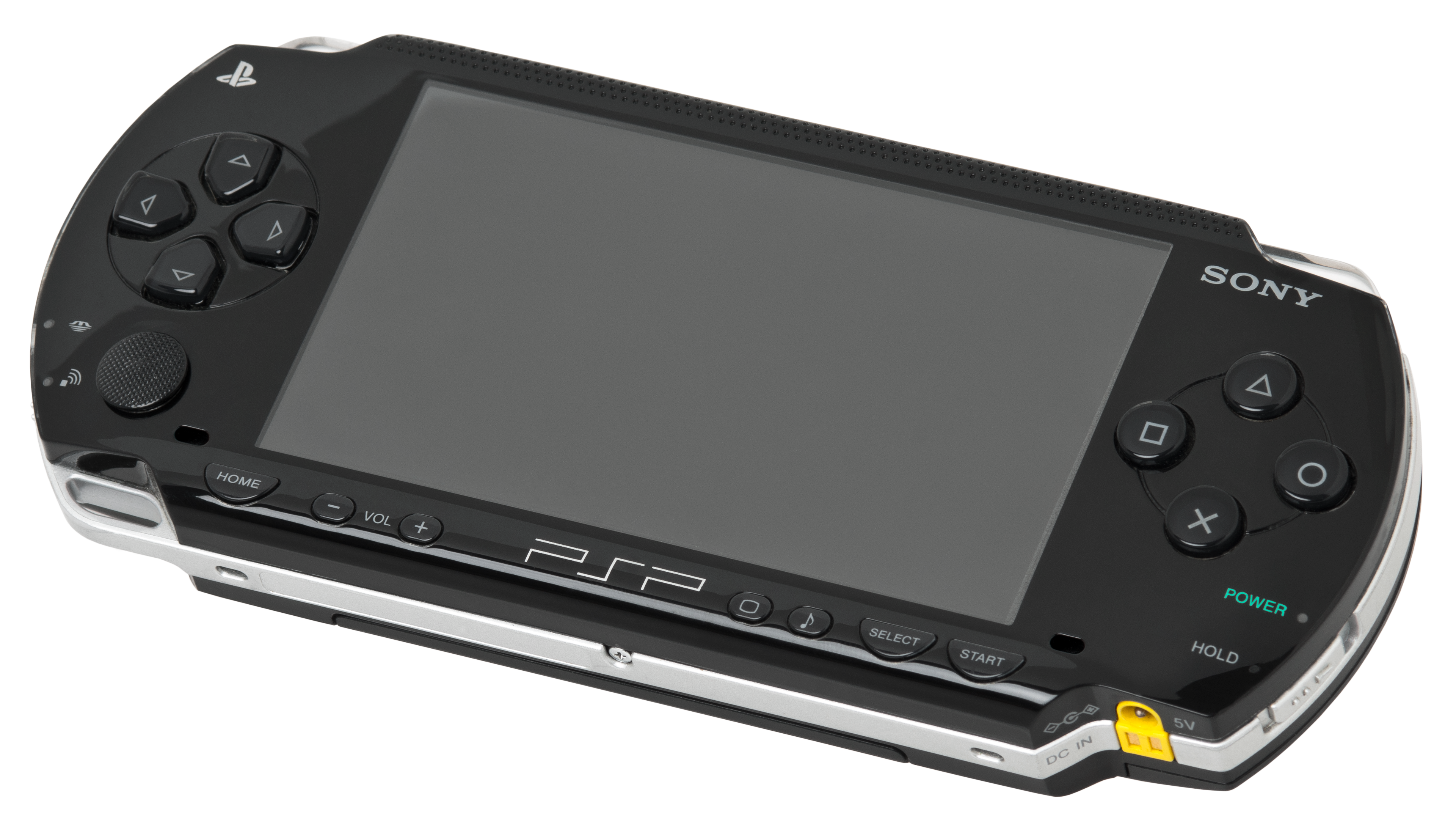
What we think of as the bog-standard PSP is actually comprised of 3 different models. The PSP 1000, which was the 2004 original came first, then the 2000 which was significantly lighter and thinner with upgrades to the RAM, USB charging and the ability to output video and finally the PSP 3000 which was ‘Slim and Lite’ just like the previous model but also features a more vibrant screen and an in-built microphone.
PSP Go
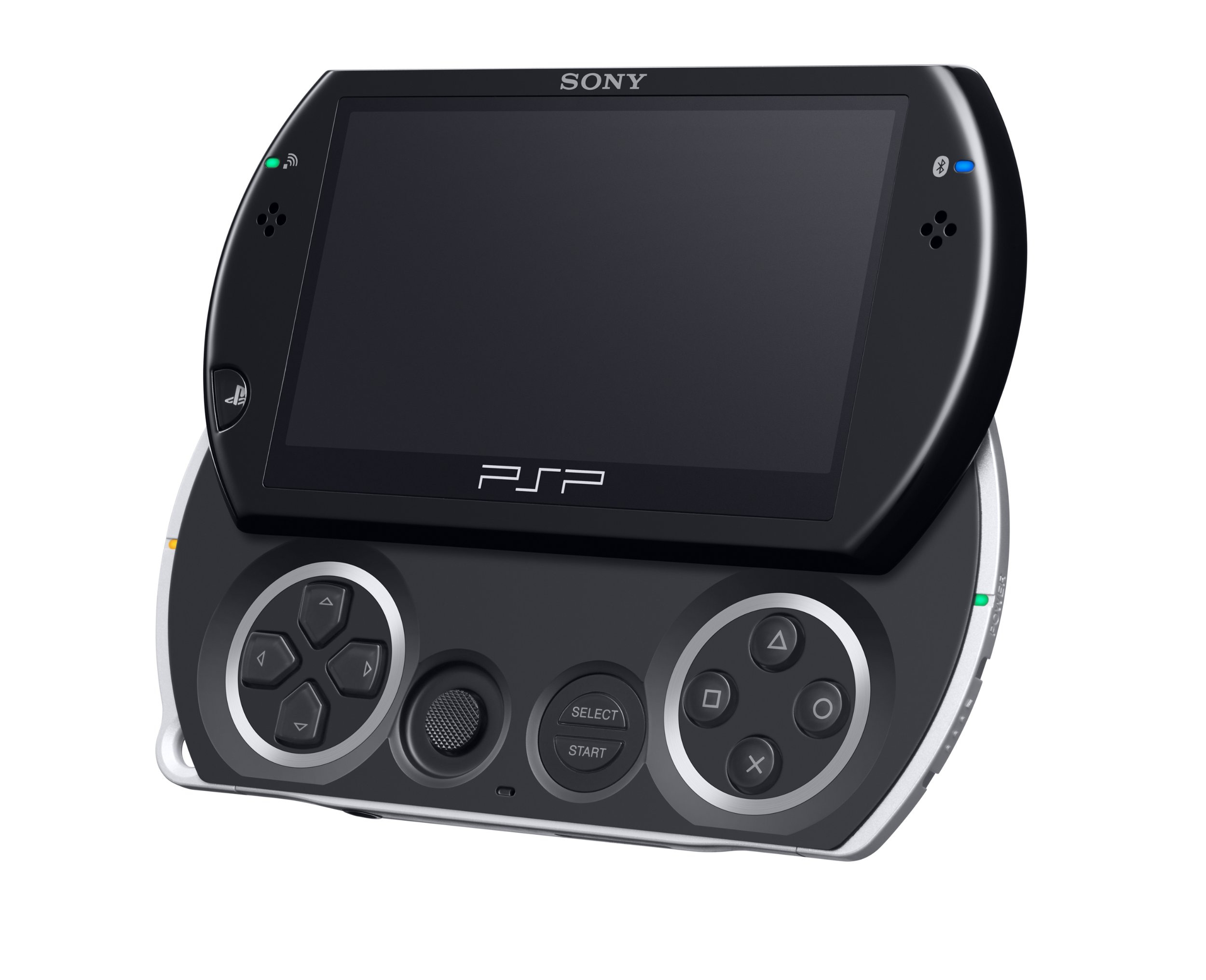
The PSP Go -sounding more like a command than a name- was Sony’s ambitious attempt at a digital-only system in 2009. The device contains no UMD drive, instead featuring expanded storage, an ultra-compact, flip phone-like design and coming with the promise that most PSP games would now be available on the PlayStation Store; many prefer the PSP Go screen to that of the 3000 but it is smaller.
PSP Street (Model E1000)
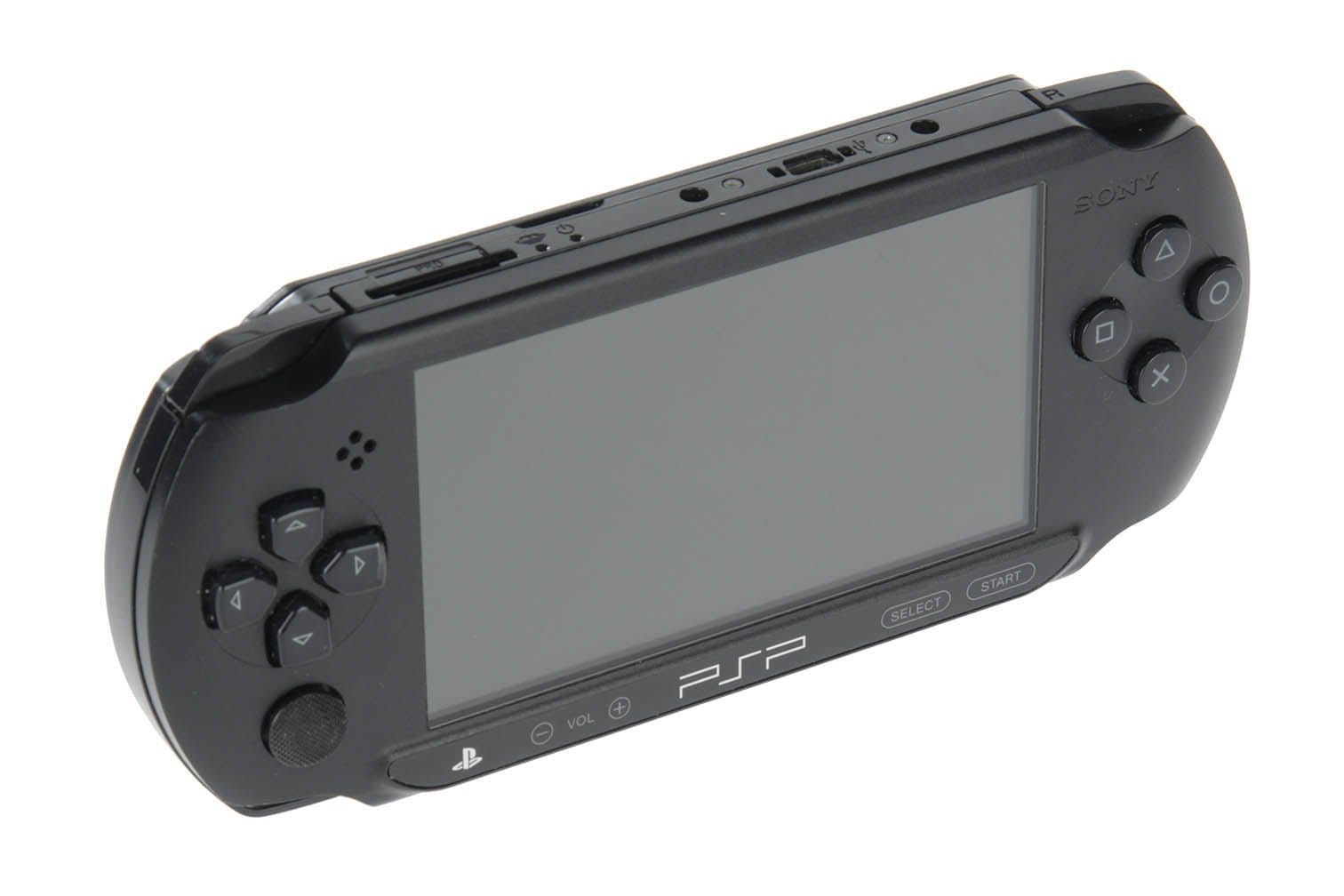
At last we come to the PSP Street: the last revision of the PSP ever released and if you’ve never heard of this model, that’s because it was a PAL and Europe-only variant. The Street was the poor man’s PSP with stripped back features such as the removal of Wi-Fi, worse speakers and a cheaper screen but the more grippy, less fingerprint-susceptible matte finish does give it an appeal of its own.
So which did I choose?
I was extremely tempted by the PSP Go and the idea of putting together an emulation and digital powerhouse but I love having actual games rather than files, plus the PSP Go’s unique form-factor and moving parts make it harder to get protective shells on the like. So my eventual choice…
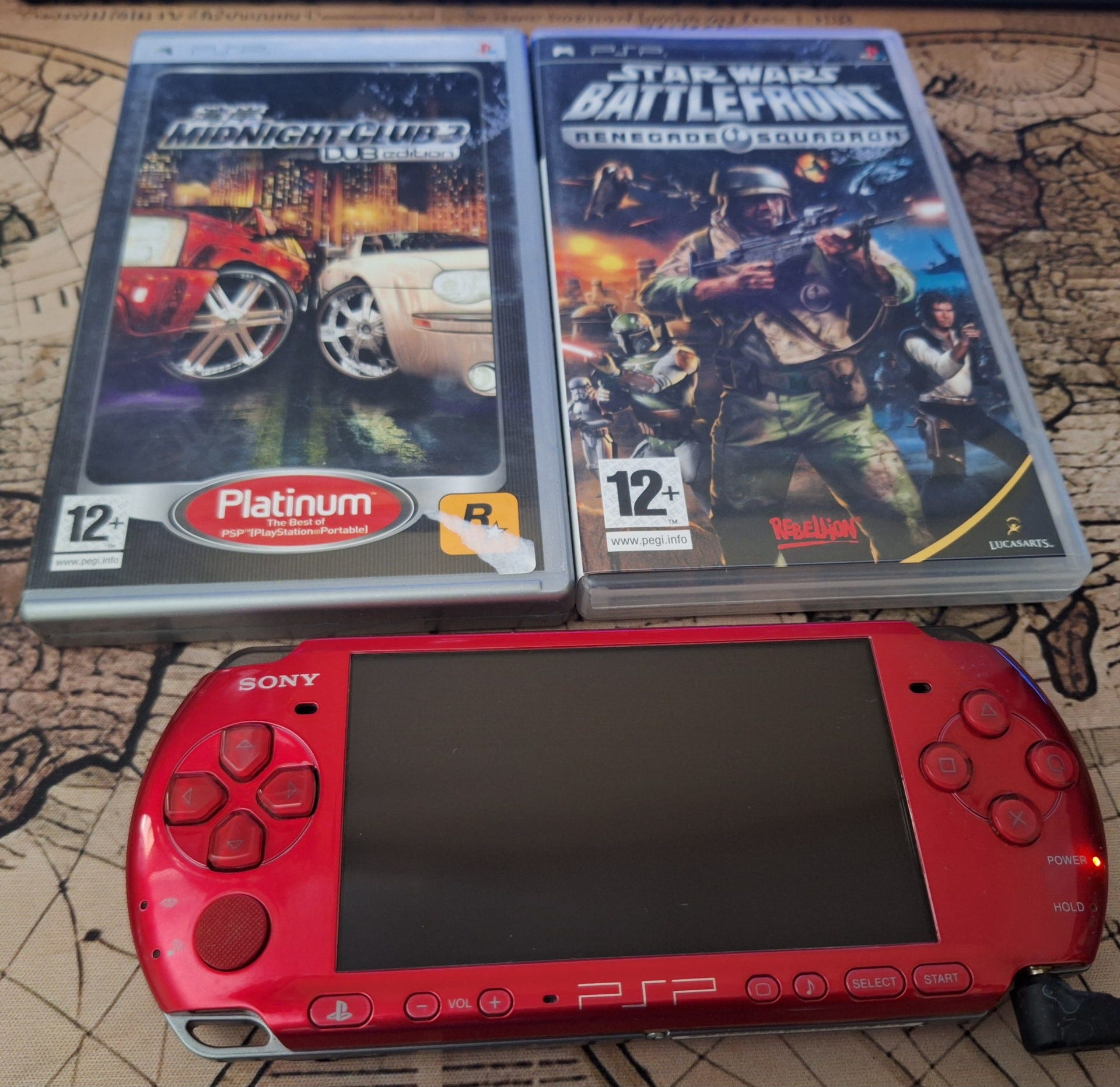
…Was the 3000 Model: specifically the Radiant Red colour. I had wanted the 3000 in white or silver but those colours were anywhere from £20-40 more expensive so I bit the bullet and got red: which is my favourite colour anyway. I have to say I’ve been in love with this thing since it arrived, so glad I got this one instead.
I grew up with the 1000 model so that vibrant 3000 screen is really improving the experience and the colour really is radiant; condition-wise I think the analogue stick has picked up a little bit of grime over time and there are 2 tiny, hair-width scratches on the screen but 1 of them is practically invisible and the other I completely tune out during play, so in all? Very satisfied. You didn’t come here to read me listing off model numbers and tech jargon though, so let’s talk about the games.
Midnight Club 3: DUB Edition
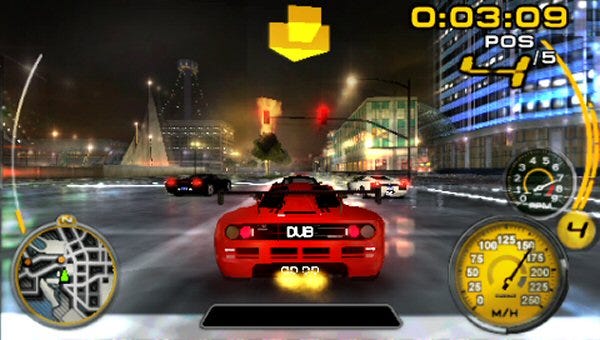
If ever there was a game for ‘guys named Kyle’ then this one is it; doused with drum & bass, hip-hop, rap and techno, loaded with classic sporty cars like the Mitsubishi Eclipse, Subaru Impreza and the Lancer Evo and fitted with 3 separate open world maps, free-roaming, an endless supply of street races and a deep customisation system, Midnight Club 3, even on the PSP, is an absolutely stacked racer and has been the game I’ve played most these past 2 weeks across all platforms.
What makes Midnight Club unique is the free-form, checkpoint-based racing. Rather than a set start and end point like on a traditional circuit, or the sectioned off roads you see in Forza Horizon, Midnight Club’s races are simply a set of points to reach on a path through the city; how you get there is entirely up to you and courses change all the time. This and the ever-present threat of traffic makes every race incredibly dynamic. You might be P1 the entire race only to get T-boned by a bus in the final moments of the final lap, the AI might take a shortcut you didn’t know about or get held up in traffic, eroding or solidifying your lead, the cars ahead of you might collide with a lamp post, losing speed and allowing an overtake, even in last place, it’s all to play for.
Different classes of vehicles have different abilities too. All vehicles can use nitro after tucking into the slipstream of another racer for a while (think of it like F1’s overtake buttons or DRS) and can tap into another, separate store of the stuff for a burst of straight-line speed, on top of that different classes of vehicles get other abilities like a time slow for weaving precisely between obstacles, the ability to clear all traffic at the push of a button or have those same cars work against other racers.
I was looking forward -owing to my memories with the game- to playing Renegade Squadron more than Midnight Club 3 but so far it has stolen the show.
Star Wars Battlefront: Renegade Squadron
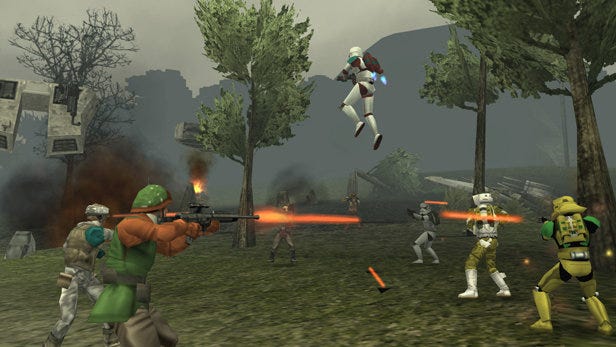
As I mentioned earlier, Renegade Squadron is a game I’m already very familiar with: my first online gaming experience was on Renegade Squadron, this was probably my most-played PSP game as a kid and for years I’ve always found it a bit of a shame that it’s been overshadowed by the rest of the series. Renegade Squadron is a fully-functional, zero compromise Battlefront experience: Instant Action, a full-length Campaign, Galactic Conquest and both eras are all here as well as extensive customisation and loadout building. Unit counts and render distance aren’t quite what they are on the PS2 entries but this version contains a lot of maps that aren’t found on consoles and handheld-friendly remakes of BF2 Geonosis and more.
Renegade Squadron follows the head of the titular unit: Col Serra as he recounts the finest hours of Renegade Squadron years after the Empire’s defeat at Endor and their subsequent disbanding and erasure from archived history. This campaign takes you from the unit’s formation through to their roles in battles like Hoth, Endor and frequent run-ins with popular bounty hunters and figures from the expanded universe like IG-88. The campaign is roughly the same length as Battlefront 2’s and while it isn’t quite as good, it tells a satisfying story and puts you into some interesting scenarios along the way.
The real star of the show is Galactic Conquest.
This version of the classic game-mode sacrifices scale for depth; you might only be battling over a handful of different sectors instead of the whole galaxy but you can recruit commanders, control how many troops are stationed on each planet and the upgrades feel a lot more impactful. This might be my favourite version of GC but I’ve never played Elite Squadron so don’t hold me to that just yet.
I’m The Upgrade
As happy as I was with my stock PSP 3000, this is a handheld that truly reaches its full potential once you get in there and ‘adjust’ its capabilities.
In terms of raw power, the PSP is a bit like a portable Dreamcast, this makes it incredible at running 8 and 16-Bit titles as well as games from the original PlayStation, so… I started to make a few changes.
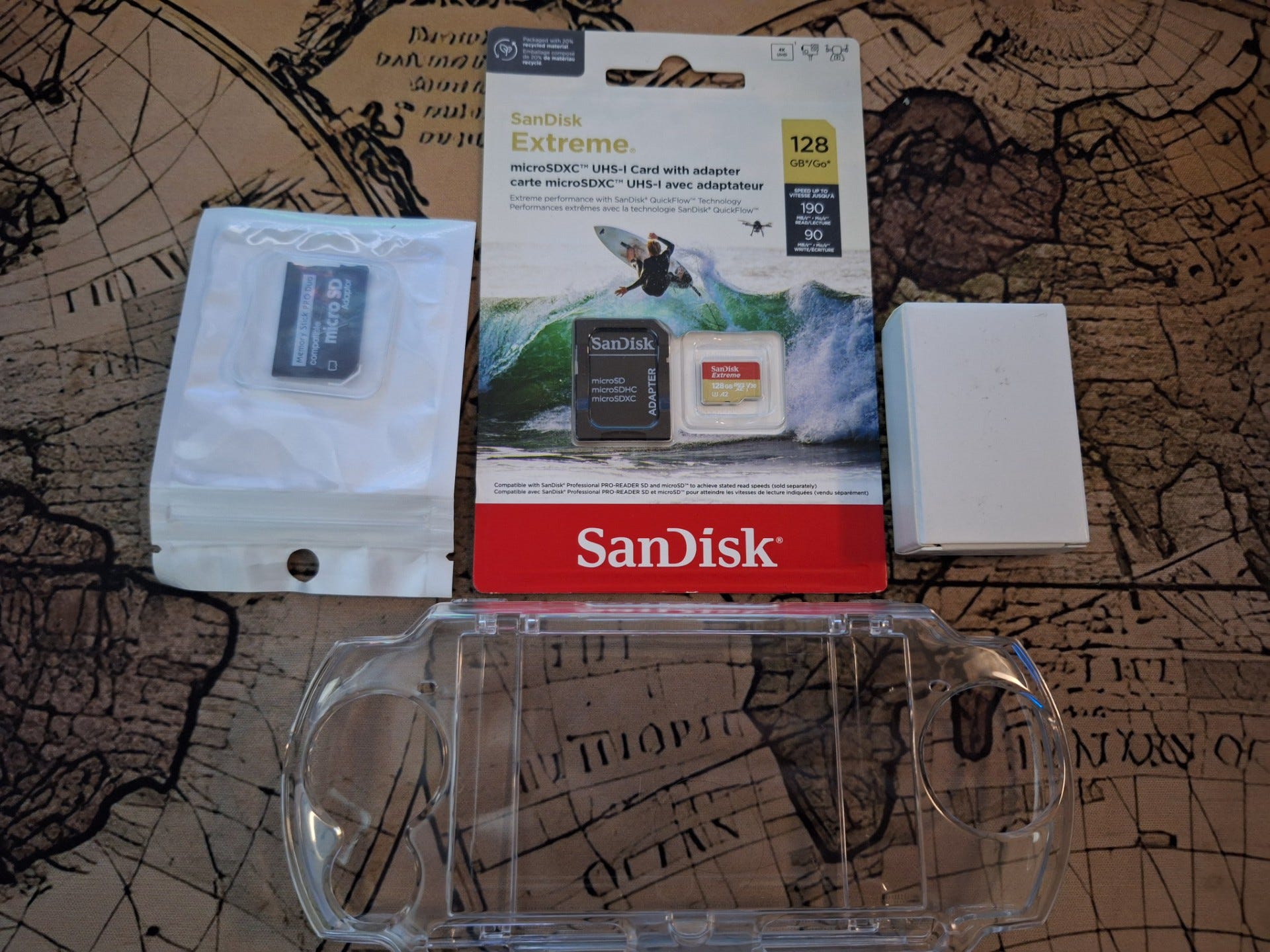
As satisfied as I was with my PSP so far it was clear that the battery in mine had either degraded or wasn’t of particularly high capacity in the first place; this is a common problem with the console, to the point where most people recommend replacing the battery as soon as you buy one. You should be getting 4-6 hours of playtime out of your PSP but mine would run dry from full charge in 2 and a half, so step 1 was to replace the battery.
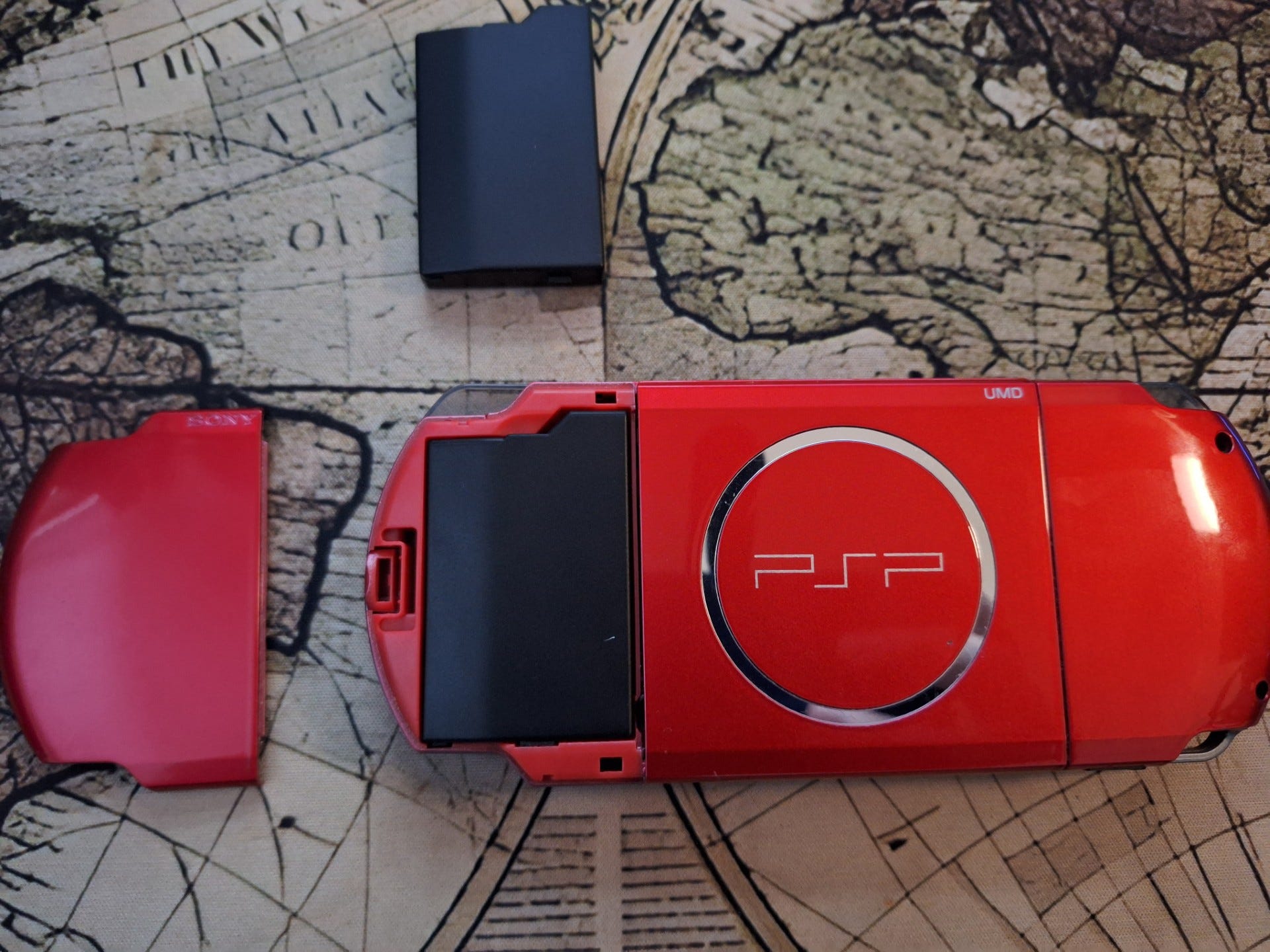
As it turned out, the battery in my PSP had already been replaced once but the model the previous owner chose was claiming to hold a capacity that was too good to be true. Replacement batteries of dubious quality with bullshit capacity are a problem across all fields of electronics, so if you do this yourself, to your own PSP, you generally don’t want to buy any batteries that claim to have more than about 2500mAh; I couldn’t find it on Amazon UK (and I couldn’t be bothered to set up Ali Express) but the Ostent and Cameron Sino brands are highly recommended.
Actually getting the battery in was a breeze, Sony built this thing in a very user-friendly fashion so while I have an ifixit kit I didn’t need to use it; just lift a tab and carefully pull.
Step 2 was to replace the onboard storage with a high capacity, modern Micro SD card. The PSP uses its own proprietary onboard storage called the Memory Stick PRO Duo: a card also used in Sony digital cameras at the time… apparently, I’ve never heard of or seen this thing outside the PSP. Thankfully, the card format means it’s easy to substitute this thing, I simply bought a £5 converter, an overpriced SanDisk, put one inside the other and the job was done.
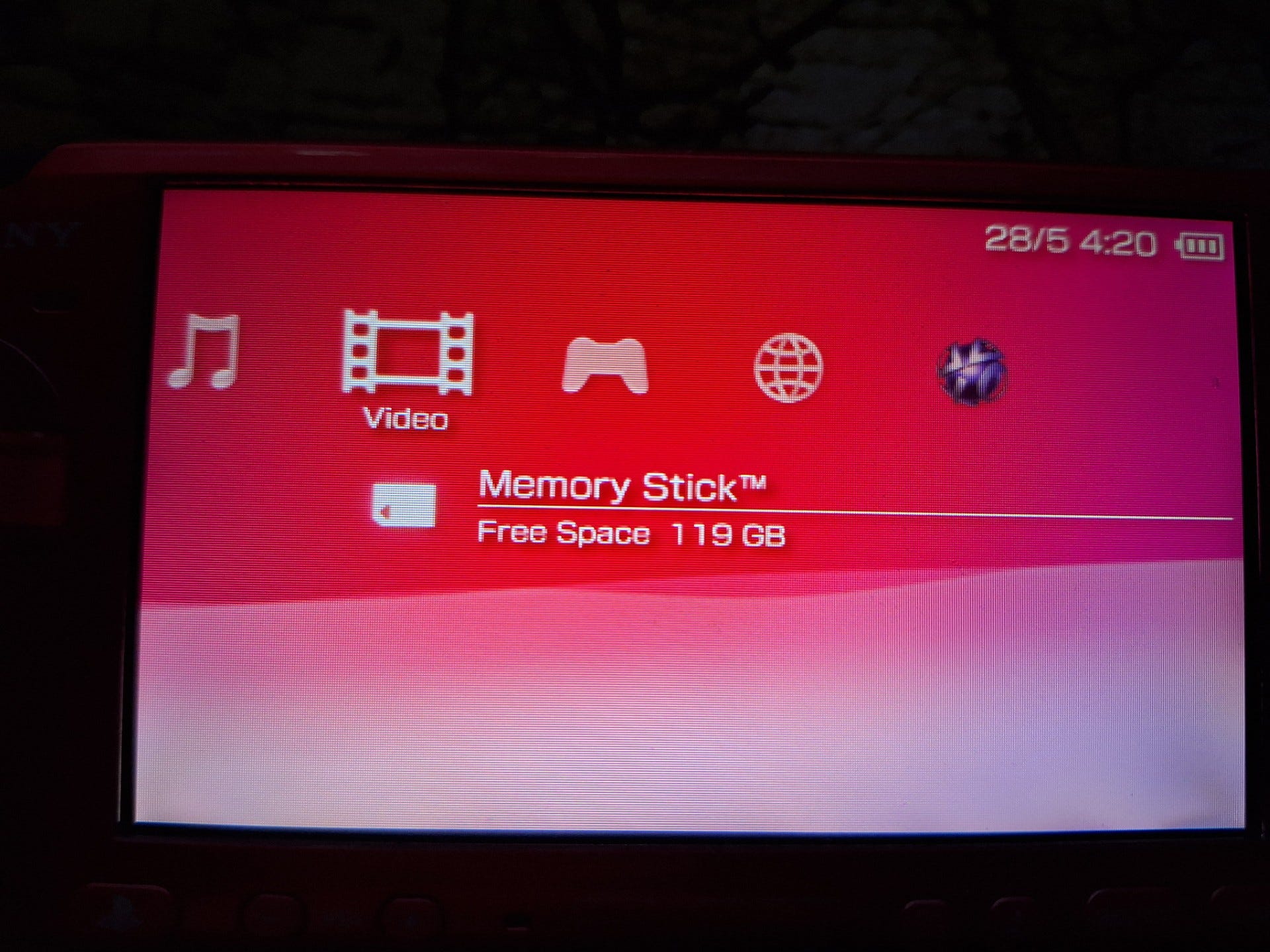
With the battery upgraded, memory expanded and the device protected, what came next was jailbreaking the PSP.
I’m not going to get into massive detail on this step of the process, partly because I’m not sure if that’s a good idea and secondly because it’s not that fun reading about someone moving files around but the custom firmware I downloaded was ARK-4 and it took me about 5 minutes to do; the only part I struggled with was finding the damn Mini USB cable I had laying around to connect the PSP to my computer. The cable you need to connect the handheld to your PC/laptop is the same one you use to charge a PS3 controller and for some older digital camera models, I’m no photographer so the DualShock 3 charging cable was my best bet, I also rarely play my PS3 so hunting that down was a bit of a pain.
Horror On The Go
After ‘acquiring’ the .eboot files for a certain, beloved survival horror trilogy on the PlayStation 1 and installing ARK-4 onto my PSP, the only thing left to do was to test it.


It has now become my nightly routine to clock in an hour of PS1 Resident Evil before bed on the PSP and it is a thing of beauty, playing brilliantly, running perfectly and looking fantastic.
I also tested ARK-4’s overclocking capabilities and while exploring that particular feature wasn’t really a goal of my custom firmware installation, the results have been far beyond what I imagined. Midnight Club 3 generally runs at an FPS count between 20-25 on a stock PSP with a render distance that can sometimes get you into trouble but with an overclocked PSP, that increases to a stable 30 with less fuzzy visuals and a slightly better draw distance; it turned a game that I enjoy playing into a game that I love playing.
Of course, you can just straight up pirate most of the PSP library like this but I’m not a fan of piracy and I like to own those little UMD’s and boxes, I did this because the actual, legitimate way to get PS1 games onto your PSP these days is hilariously convoluted, or requires you owning the PS1 disc and converting it to a PSP-friendly format yourself; there is software that makes this easy but I own Resi 1 on Saturn and Resi 3 on Dreamcast so this path wasn’t that attractive to me. Sony and Nintendo, you two specifically, you make piracy worse by making your back catalogue as annoying as possible to access legitimately. If the PSP Store was still up or transferring PS1 games to this handheld legitimately wasn’t like theoretical physics, then I’d have happily paid money.
In conclusion, this was so quick, easy and relatively cheap to do that I cannot help but recommend that every PSP owner installs ARK-4. The CFW is non-permanent by default, can be easily deleted if you plan to sell the PSP on and takes about 5 minutes to install. With a £30 Micro SD you have enough space to install somewhere in the realm of 100 games onto your handheld; at that rate, most people would take years to fill up their console.
The Steam Deck and Switch 2 are only getting more expensive, the PlayStation Portal is a fundamentally anti-ownership device and the quality of those 3rd party handhelds is… unpredictable, to say the least. If you’re willing to watch a short video guide and hook up a USB to a laptop or PC then even the 22 year old PSP could be your dream handheld… and this one actually fits in your pocket.
Join me next time when I will be reviewing the new James Bond game: 007 First Light.
Thank you very much for reading to the end. The majority of my readers don’t leave a like on their way out so I’d really appreciate it if you did, it does wonders for the publication. I’d love to chat as well, so be sure to comment.
Subscribe for more articles just like this one and please consider a monthly subscription or one-time donation to my Ko-Fi page via the ‘Support Scanlines’ button below. I also run a science fiction publication where I publish stories roughly every week, I encourage you to give it a read.
This encourages me to search for a new battery to my old PSP and give it a go. I tried to emulate PSX on my New 3DS, but the performance was far from ideal (plus, it felt like heresy).
Thanks for sharing your experience!